
Most comparisons of subscription billing software start with feature lists. Plans, coupons, customer portals, and integrations can look complete on paper. Operational gaps emerge later, when a renewal, discount, and shipment no longer match the same customer record.
The subscription economy was estimated at USD 492.3 billion in 2024 and is projected to reach USD 1.512 trillion by 2033, with a 13.3% compound annual growth rate from 2025 through 2033, according to Grand View Research's subscription economy analysis. North America accounted for 38.2% of 2024 revenue, business-to-business subscriptions for 55.2%, and fixed subscriptions for 48.1%. Those B2B and fixed-subscription shares provide context for why renewals can involve more than charging a card: taxes, pauses, and failed payments also need to stay connected to the order.
This guide compares seven options by where subscription data lives: inside a Shopify app, in a separate billing layer, or on a consolidated commerce record. It examines how each handles renewals, dunning, proration, and integrations, then considers how business stage and operational complexity shape the choice.
Table of Contents
- 1. Subscriptions on PlatformDTC
- 2. Recharge
- 3. Appstle Subscriptions
- 4. Stripe Billing
- 5. Recurly
- 6. Chargebee
- 7. Zuora Billing
- How the seven subscription billing options compare on best use case, platform scope, public pricing visibility, and setup complexity
- Matching Your Subscription Stack to Your Growth Stage
1. Subscriptions on PlatformDTC
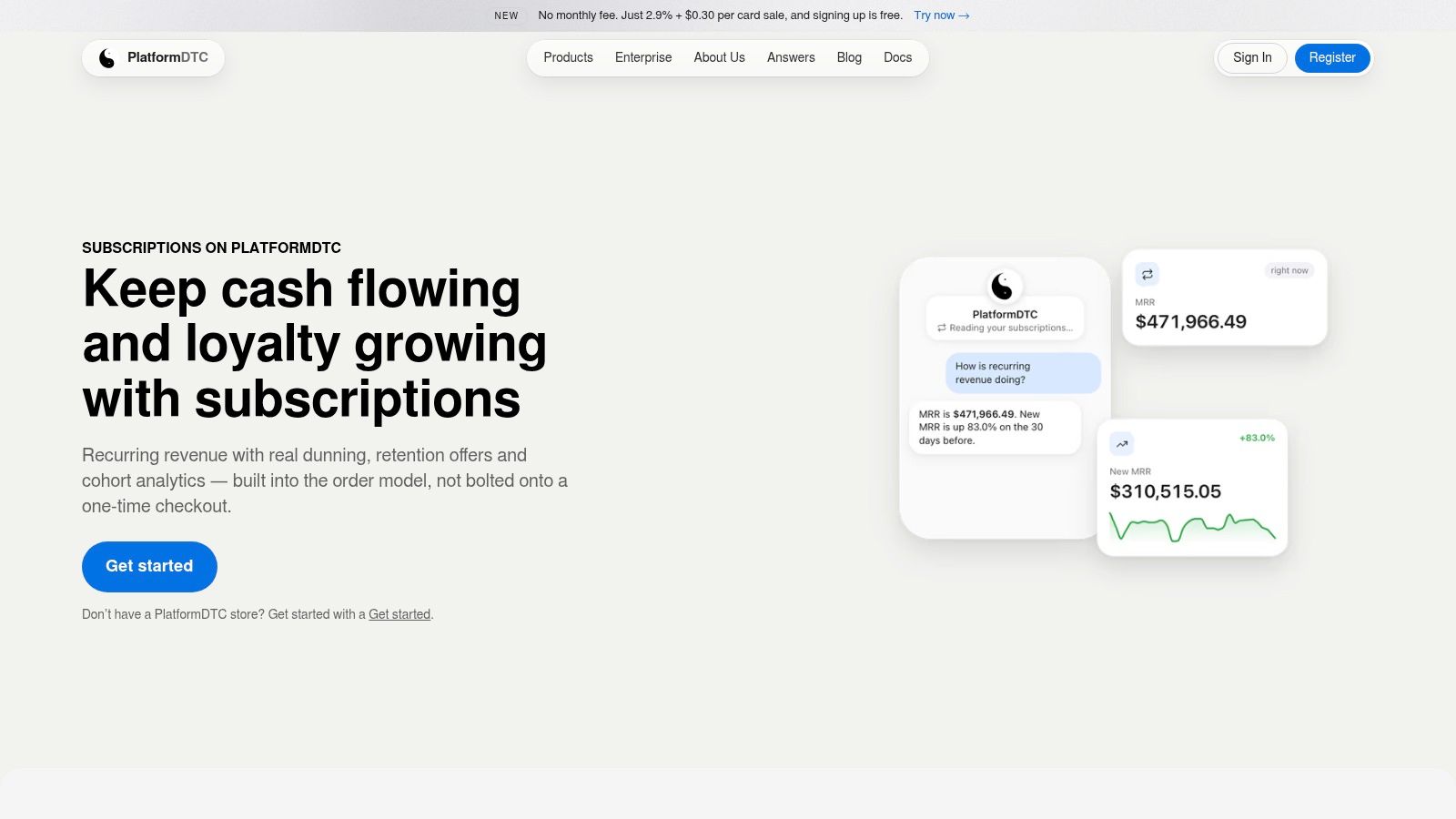
Subscriptions on PlatformDTC places recurring commerce within the same platform as checkout, payments, fulfillment, and analytics. Its order-lifecycle approach keeps subscription activity alongside one-time purchases, rather than putting it in a separate billing record. That distinction matters for teams reconciling customer, payment, and order data.
The global subscription billing management market was valued at USD 7.2 billion in 2024. For buyers, the relevant question is how a platform connects recurring orders to day-to-day commerce operations.
One record instead of a second system of truth
The PlatformDTC subscriptions feature page presents subscriptions as part of its commerce platform. It does not publicly confirm the details needed to compare renewal controls, dunning, proration, pauses, or integrations. Those capabilities should be checked directly before choosing it over a standalone billing engine.
The distinction is about where subscription data sits. PlatformDTC's stated order-lifecycle approach connects subscription activity with commerce records; a separate billing layer requires buyers to establish how those records sync. The available feature information does not establish how failed renewals are retried or how plan changes affect charges, so those details should not be assumed.
Practical rule: Confirm how a failed renewal, a plan change, and a subscription order appear in the records used by finance and fulfillment.
The platform may suit operators seeking subscriptions within a broader commerce system. A narrower recurring-charge requirement may call for a more focused tool. For teams evaluating subscription-based ecommerce models, the trade-off is an order-lifecycle approach versus a standalone billing layer, with renewal and integration details still requiring confirmation.
2. Recharge
Shopify brands with physical-goods subscriptions can add recurring billing without replacing their storefront. Recharge provides subscription sign-up, a customer portal, retention offers, and prepaid or gift options. The trade-off is that subscription management sits in a separate app layer, rather than in a consolidated commerce record.

- Subscriber self-service: Customers can manage orders through the portal, reducing routine support requests.
- Offers and prepaid plans: Upsells, cross-sells, prepaid subscriptions, and gifts suit repeat-purchase catalogs better than pure SaaS contracts.
- Separate billing layer: Store, payment-processing, and app costs remain separate. Check Recharge's current fees and plan terms against projected order volume before committing.
For teams building a subscription service website, the key evaluation is whether subscription changes and renewals remain easy to reconcile with store orders. Recharge fits merchants who want dedicated subscription tools while keeping their existing storefront. A bundle-builder example such as create your Mouthology bundle illustrates the product-bundling use case, not Recharge's billing capabilities. Verify current features, fees, and terms directly with Recharge before choosing it.
3. Appstle Subscriptions
Shopify merchants who want recurring orders without an enterprise billing project often start here. Appstle Subscriptions stays inside the store: plans, product swaps, cancellation rules, and order sync live next to the catalog you already run.
That proximity is the advantage and the ceiling. Inventory and orders sync with Shopify, and workflows can reach Shopify POS, so a retail counter isn't a totally separate subscriber list. You aren't buying quote-to-cash, multi-entity invoicing, or a finance system of record. You're buying rules on top of one storefront.
- Store-native plans: Recurring orders stay close to existing products and customers.
- Merchant-set rules: Swaps and cancellation handling are part of the pitch, not a later module.
- Evaluation path: A free tier is advertised, which lowers the cost of a pilot.
- Platform lock: Cross-channel or non-Shopify billing isn't the job.
Plan limits, paid features, and support terms change, so verify them on the Appstle Subscriptions pricing page before you model volume. If every subscriber is a Shopify customer and proration is simple, this layer is enough. If wholesale contracts and online renewals must share one customer, the app boundary becomes the problem.
4. Stripe Billing
A Stripe account can become a billing layer without introducing another processor. Teams create subscriptions through the Dashboard, Payment Links, Checkout, or APIs, then give customers a billing portal. Automatic reminders, Smart Retries, and subscription schedules support payment recovery and planned changes.
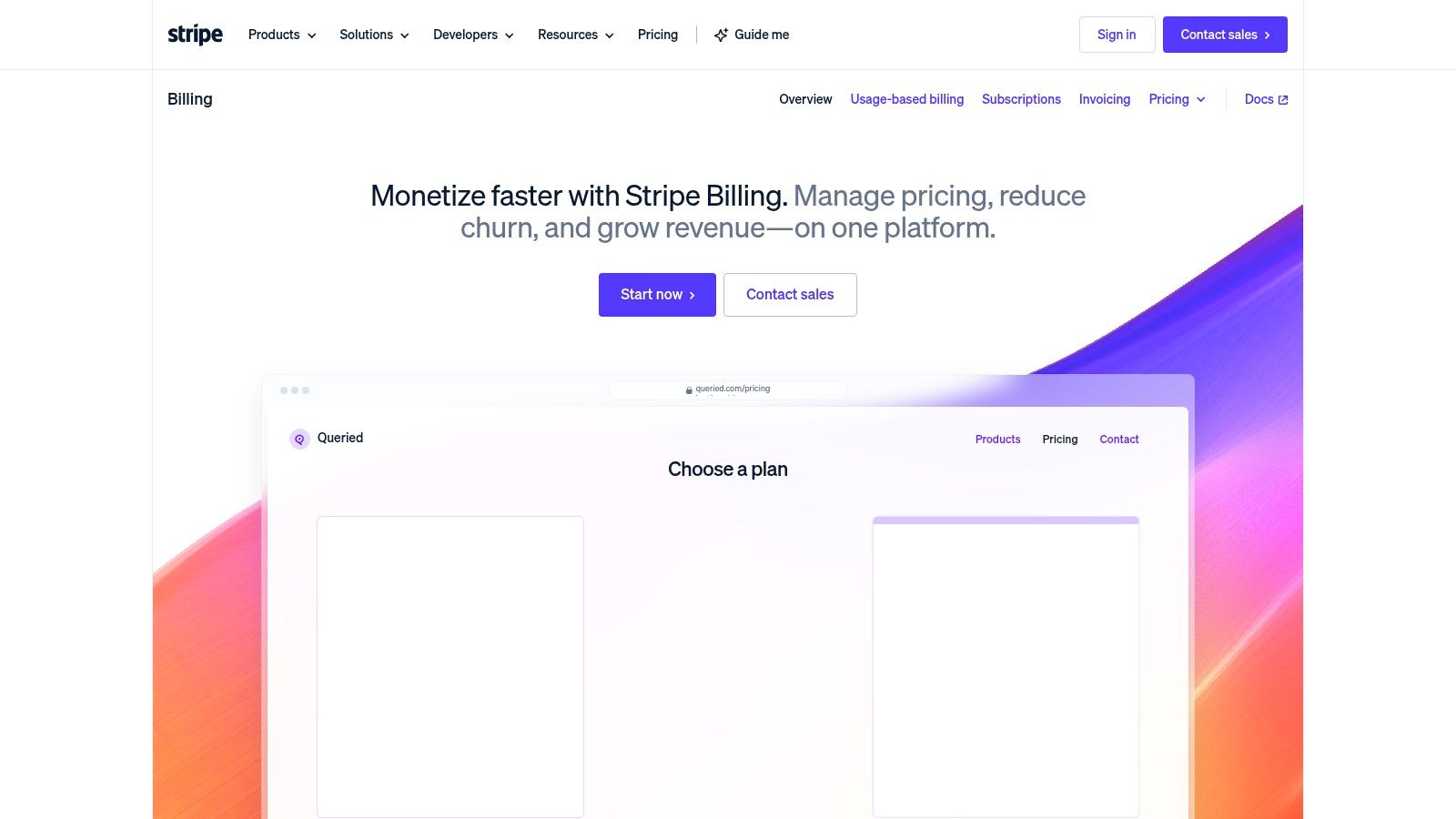
The trade-off is where subscription records live. Stripe manages billing and payment activity, while inventory, fulfillment, and merchandising remain elsewhere. For physical DTC, a successful retry does not by itself update a warehouse or connect the subscription to an order lifecycle. That integration work falls to the merchant.
Stripe Billing charges a percentage of billing volume on top of payment-processing fees. A branded customer portal may also require custom development. These costs and build requirements matter when comparing a separate billing layer with SaaS subscription models or an order-lifecycle system that keeps subscription and commerce records together. Stripe's Billing pricing and features clarify the separate billing fee; the fit depends on whether payment management or connected physical-order operations are the priority.
5. Recurly
Recurly is a dedicated billing layer for businesses whose subscription operations have outgrown a basic app. Plans, promotions, subscriber management, and payment recovery sit at the center of the product. Its billing data is managed separately from a store's order and fulfillment records, so teams selling physical goods need to connect those systems deliberately.
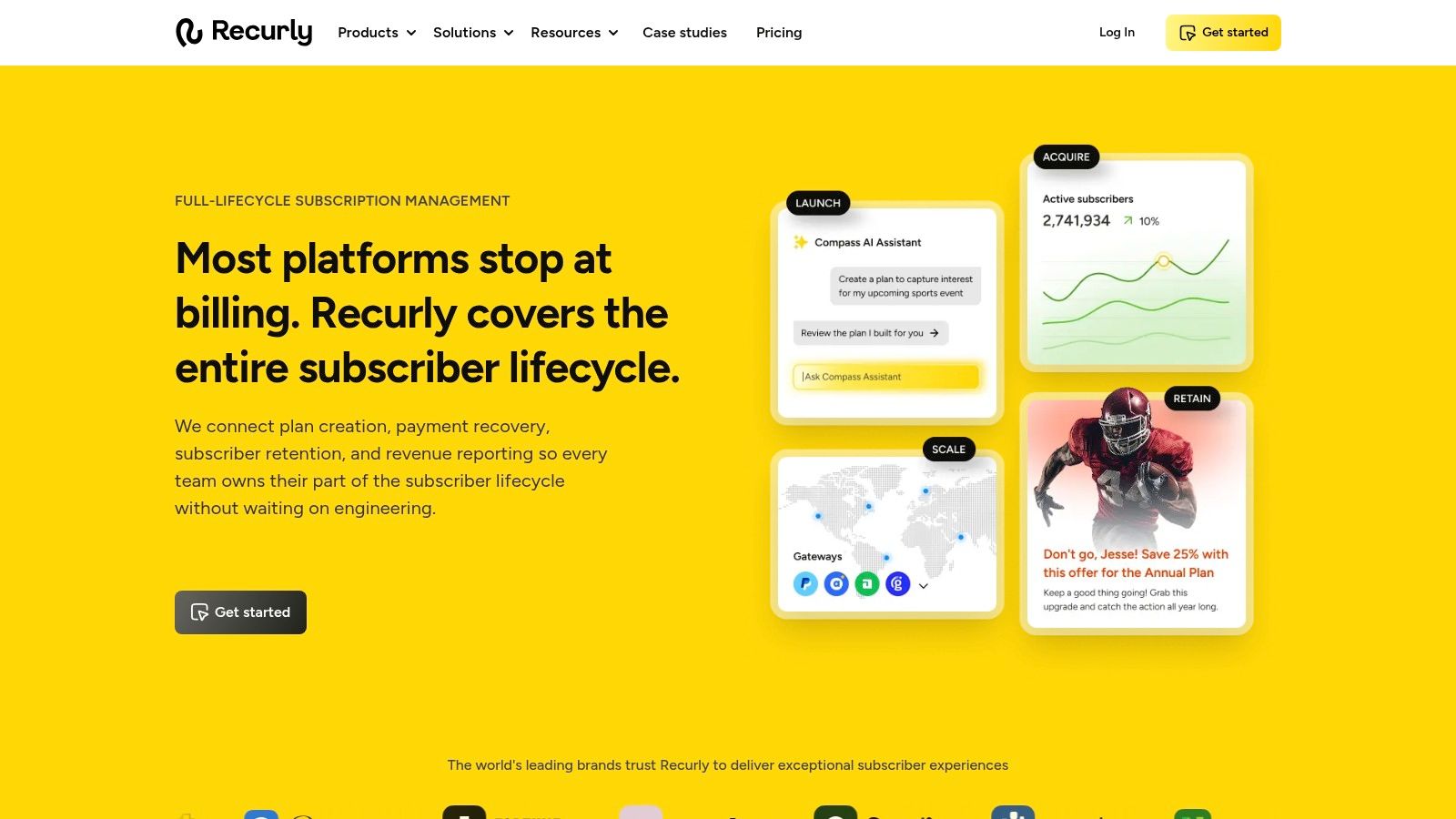
Recurly's documented features include automated retries, dunning, and account updating. These tools address failed payments and subscriber retention, but buyers should assess recovery against their own payment data rather than assume a particular improvement. The industry payment data datasheet discusses payment trends broadly; it does not establish Recurly-specific recovery results.
- Recovery: Review retry controls and cancellation-management features against the causes of failed payments.
- Payment setup: Check whether supported payment methods and gateways fit your customer base.
- Pricing: Confirm the applicable package and fees directly with Recurly, since costs depend on the agreement.
- Operational fit: Map how subscription records connect to orders, customers, and fulfillment before implementation.
Recurly suits teams that need dedicated subscription-management capabilities and can manage a separate billing layer. Its current product and packaging details are available from Recurly.
6. Chargebee
Chargebee suits subscription businesses whose pricing extends beyond a fixed monthly charge. It supports recurring, usage-based, and hybrid billing, with customer portals, coupons, invoicing, and dunning in the billing layer. That separation can help finance teams change billing rules without rebuilding the storefront. It also means order and fulfillment data may need to be connected separately.
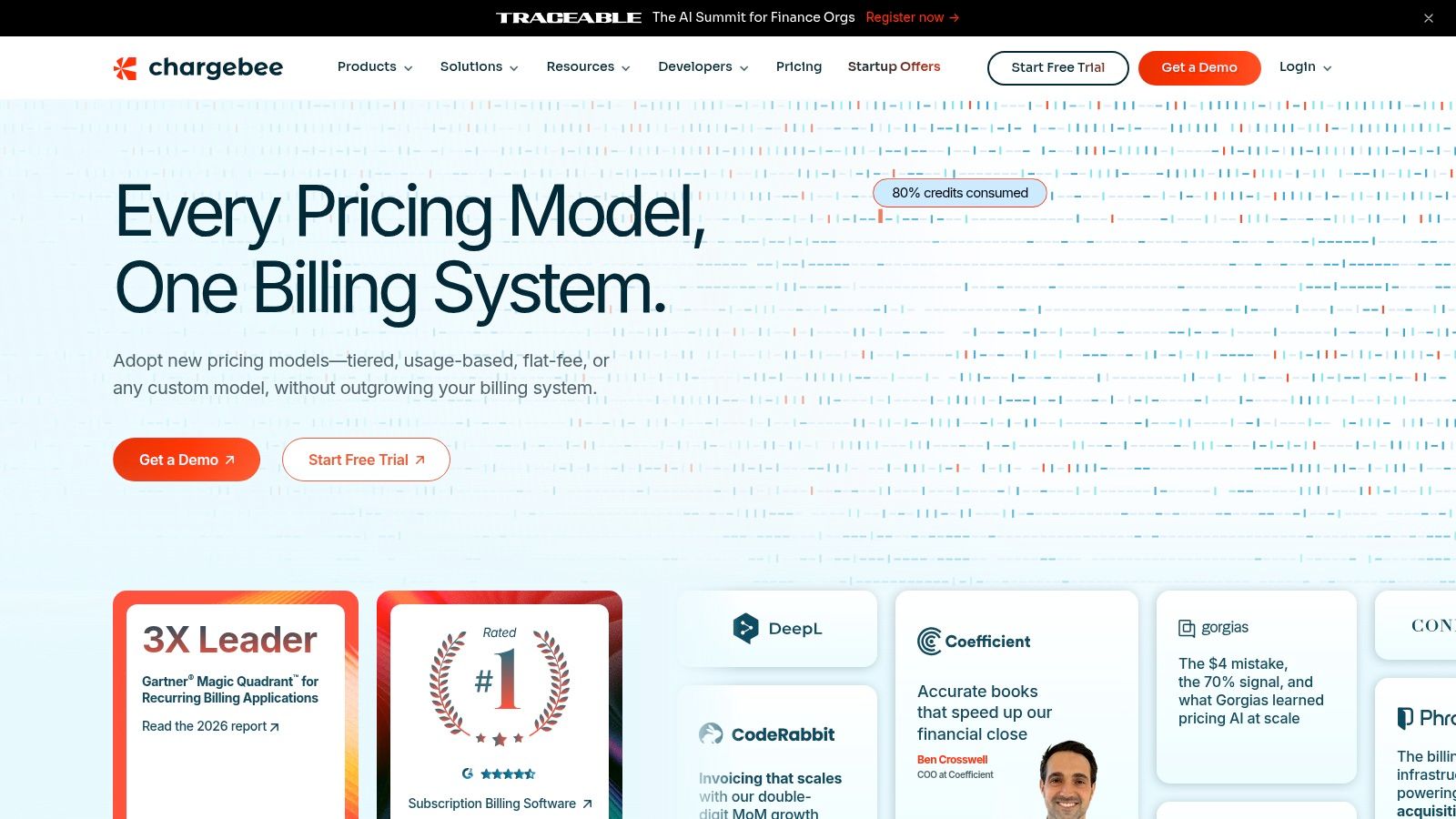
Dunning tools support automated payment retries, while the customer portal lets subscribers manage their accounts. Usage-based billing is relevant when charges depend on measured consumption, rather than a standard replenishment schedule. For a DTC brand shipping the same product on a fixed cadence, those capabilities may add more configuration than value.
Before switching, check which migration services are included and whether billing records can be exported in a usable format. Pricing and available integrations can vary by plan, so confirm the quote and required features directly with Chargebee. Choose it when billing rules, usage meters, or finance workflows have outgrown a Shopify app. For a simple recurring SKU, an app-based tool or a consolidated commerce record may keep subscription and order data closer together.
7. Zuora Billing
Zuora Billing is the enterprise end of this list. Recurring, one-time, and usage-based pricing, plus flexible attributes and schedules, fit contracts that a store app can't describe. Editions and collections add-ons exist because the buyer is usually finance, not a growth marketer launching a refill.
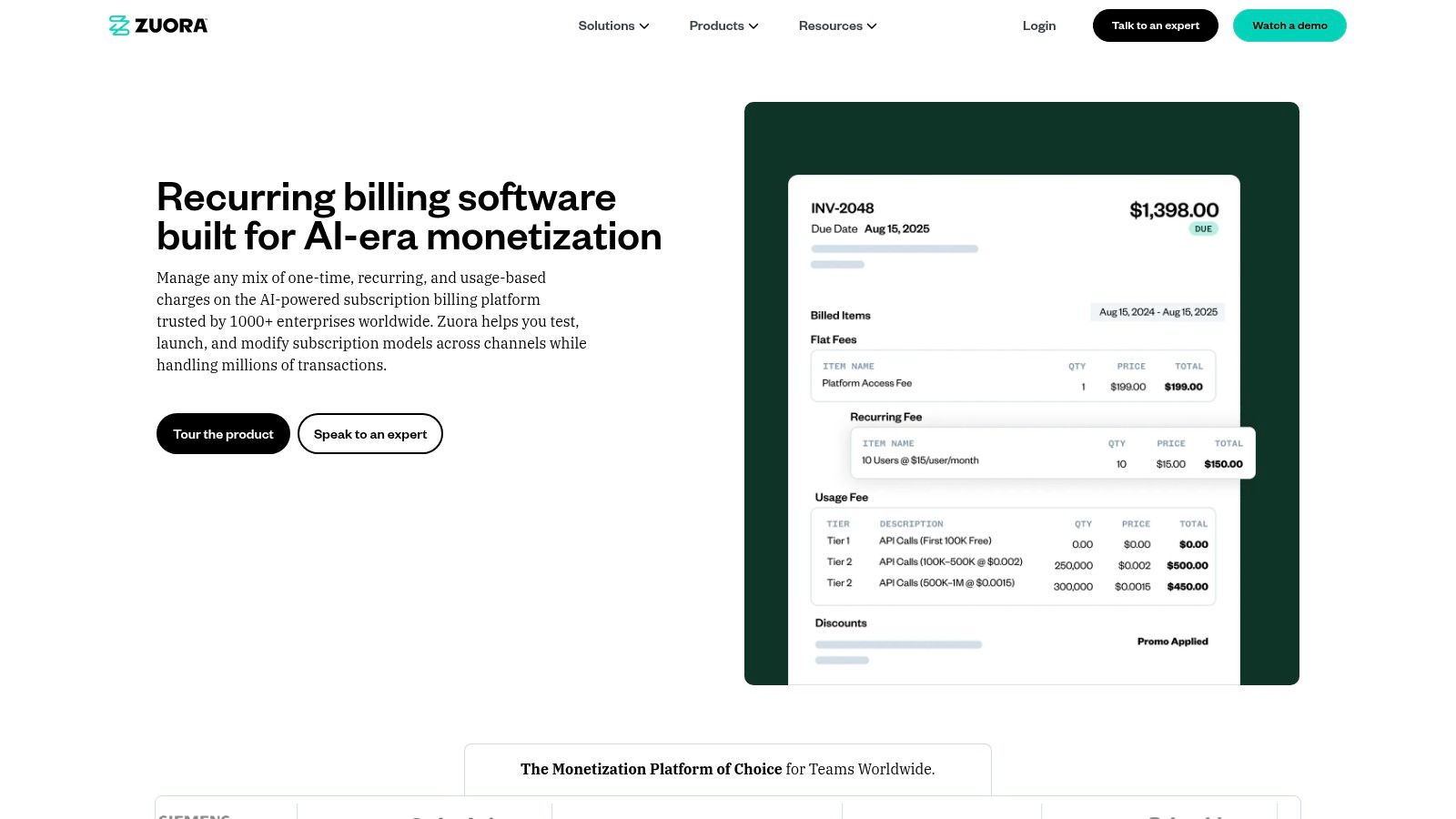
Companies in Zuora's Subscription Economy Index grew revenue 11% faster than the S&P 500 over the two years ending December 31, 2024. That index describes subscription businesses, not a promise that installing Zuora produces the gap. It does show why complex catalogs get a system of record.
There isn't a simple public price list, so procurement starts with sales. Implementation and operating overhead are part of the product, and basic recurring product orders don't justify it. Published entitlement docs are worth reading before a demo, because edition differences decide whether collections and advanced billing are included or sold later. For multi-product, multi-contract scale, review Zuora Billing. For a single DTC replenishment program, it's the wrong weight class.
How the seven subscription billing options compare on best use case, platform scope, public pricing visibility, and setup complexity
| Item | Best For | Platform Scope | Public Pricing | Setup Complexity |
|---|---|---|---|---|
| Subscriptions on PlatformDTC | DTC brands consolidating commerce and subscriptions | Integrated commerce platform | Not specified | Lower when using the existing platform |
| Recharge | Ecommerce brands, especially Shopify-based DTC businesses | Ecommerce subscription platform | Tiered plans; fees vary by plan | Moderate; requires store integration |
| Appstle Subscriptions | Shopify merchants adding customizable recurring purchases | Shopify app | Free tier advertised; paid plan details should be verified | Low to moderate within Shopify |
| Stripe Billing | Teams needing flexible recurring billing with Stripe payments | Billing platform and APIs; not a full ecommerce platform | Published pricing; billing fees are separate from processing | Low with no-code tools; higher for custom integrations |
| Recurly | Brands needing subscription billing and retention tools | Subscription-revenue platform with ecommerce integrations | Published Starter pricing; advanced pricing by sales inquiry | Moderate; check integrations with existing systems |
| Chargebee | Businesses with varied or complex billing models | Billing platform with business-system integrations | Published plan comparison; add-ons may affect costs | Moderate to high depending on products and integrations |
| Zuora Billing | Enterprises with complex contracts, catalogs, and billing needs | Enterprise billing platform | No standard public price; contact sales | High; enterprise implementation and operations overhead |
Matching Your Subscription Stack to Your Growth Stage
Choose a subscription tool by where it keeps customer and order data. A separate billing layer can suit digital plans, while a Shopify app keeps recurring orders close to the storefront. For brands combining subscriptions with one-time purchases, a consolidated commerce record can reduce the gaps between billing, fulfillment, and reporting.
Mastercard's 2025 subscription research reports churn figures from a different sample and definition than the Churnkey and Recurly figures discussed earlier. Treat them as separate signals, not directly comparable baselines. Across these sources, the practical lesson is to track why subscribers leave and whether failed payments are recoverable. Billing data that does not reach finance and fulfillment can make those problems harder to address.
Match the data layer to your operating needs:
- Simple Shopify replenishment: Appstle or Recharge keeps subscription plans alongside the store. Track payment recovery by decline reason.
- Stripe-native digital plans: Stripe Billing suits teams without inventory in the fulfillment flow, with payment processing concentrated in Stripe.
- Retention or hybrid pricing: Choose Recurly when payment recovery is a priority, or Chargebee when usage billing, invoices, and finance workflows add complexity.
- Enterprise contracts: Zuora fits quote-to-cash operations when the business can support a longer implementation.
- Subscriptions mixed with one-time orders: PlatformDTC keeps checkout, payments, inventory, and analytics within the same order lifecycle.
Before choosing, document renewal, dunning, proration, pause, and cancellation rules. Test a small cohort, confirm pricing, contract term, and data export with the vendor, then compare long-term costs, including payment loss, chargebacks, support, and migration risk.
PlatformDTC places subscriptions in the same order lifecycle as checkout, payments, fulfillment, and analytics. For DTC catalogs that also handle one-time and wholesale orders, that consolidated record is an alternative to a standalone billing engine. Learn more about PlatformDTC.