How many shoppers abandon your checkout because the payment method they wanted wasn't there? A landing page can answer every product objection and still send a willing buyer into a payment flow they don't want to complete.
For DTC operators, Stripe Checkout payment methods are a conversion decision and an operational commitment. Cards provide a dependable baseline. Wallets reduce typing for eligible shoppers. Buy-now-pay-later options address payment flexibility, while bank methods can suit customers who prefer paying directly from an account.
The mistake is treating those choices as interchangeable buttons. A wallet that works beautifully on a supported device won't help someone who hasn't configured it. A financing option that improves initial purchase completion still needs workable refund handling. A bank debit shouldn't trigger fulfillment before your system has the appropriate payment confirmation.
Practical rule: Choose payment methods for the customers you actually serve, then evaluate the entire order lifecycle, not just the checkout click.
The useful comparison isn't which method has the longest feature list. It's who can use it, what friction it removes, and what your team must maintain. Start with geography, device mix, purchase type, and customer familiarity. Then measure completed orders, payment failures, refunds, and renewals rather than assuming that more payment logos mean a better checkout.
Table of Contents
- 1. Online payment methods by country, wallet, BNPL, bank and card
- 2. Credit and debit cards
- 3. Apple Pay
- 4. Google Pay
- 5. Link
- 6. PayPal
- 7. Affirm
- 8. Klarna
- 9. Cash App Pay
- 10. ACH Direct Debit
- Stripe Checkout payment methods at a glance
- Choosing the Right Mix for Your DTC Checkout
1. Online payment methods by country, wallet, BNPL, bank and card
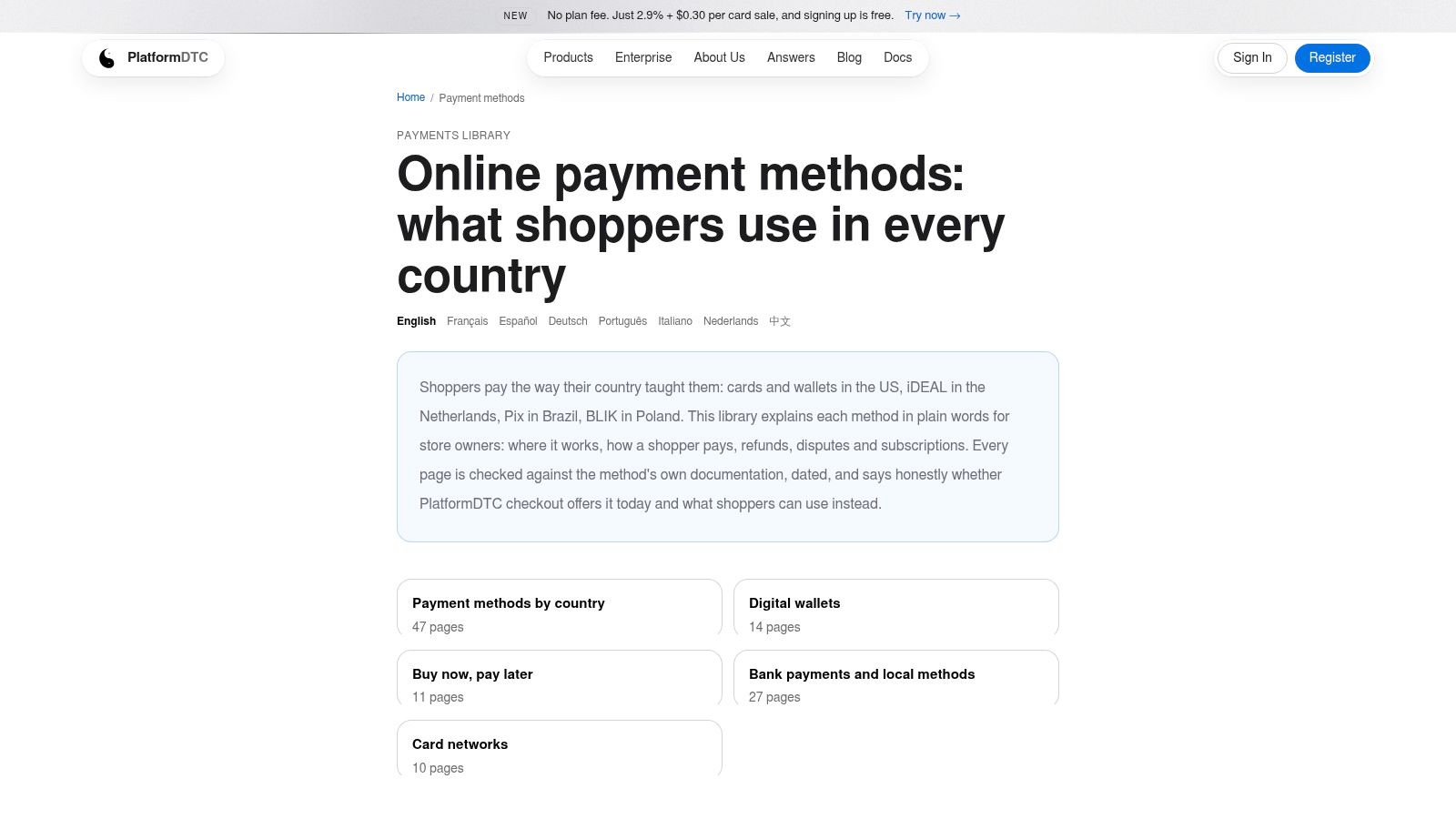
Start with an availability map, not a global wish list. The PlatformDTC payment-methods guide is a reference for comparing payment categories, country availability, and purchase-type restrictions before deciding what belongs in a checkout.
This is different from choosing an individual wallet. A merchant needs to understand where cards, bank payments, wallets, and installment options fit together, including where subscription eligibility changes the answer.
What the guide helps you decide
Use the payment methods index to organize market research around the customer's country and intended purchase. A shopper buying a product outright and another starting a subscription may not qualify for the same options, even when both use the same currency.
- Conversion fit: Identify familiar local options instead of exporting your home market's preferences everywhere.
- Eligibility limits: Treat country and subscription restrictions as checkout requirements, not footnotes.
- Integration effort: Separate methods handled through your existing payment integration from those needing additional accounts, reporting, or lifecycle logic.
The broader category of alternative payment methods for merchants is useful for planning, but category coverage isn't proof of transaction-level availability.
The limitation is important: an availability guide can help shortlist methods, but it can't guarantee what an individual shopper will see. Your checkout still needs to evaluate the account, customer, currency, cart, and payment flow. Keep marketing promises narrower than your theoretical payment-method coverage.
2. Credit and debit cards
Cards are the baseline, not the whole strategy. Visa through Stripe represents the familiar card-payment experience that shoppers can use without adopting another payment service.
Cards suit straightforward purchases and recurring billing, subject to network, account, and transaction support. Their weakness is the manual-entry path: a mobile shopper may need to find a card, type its details, and complete authentication before placing the order.
Familiar doesn't mean frictionless
Stripe reported the ability to launch localized checkout experiences in more than 100 countries simultaneously in its 2025 annual letter. For operators, that breadth makes local payment preferences more important, not less: card acceptance alone doesn't establish that a checkout feels local.
Keep cards available while improving the surrounding experience:
- Reduce re-entry: Preserve valid customer information after a failed attempt without retaining sensitive card details yourself.
- Explain failures: Give shoppers a useful retry path or another eligible method.
- Separate channels: Don't confuse online card authentication with physical-terminal behavior; this guide to EMV chip-and-PIN credit cards explains the latter context.
Integration effort is relatively contained when cards run through Checkout. Subscription recovery, authentication, and failure handling still deserve explicit testing.
3. Apple Pay
Apple Pay through Stripe is a strong starting point when your customers shop on supported Apple devices and have an eligible wallet configured. It replaces card-detail entry with a familiar wallet authorization flow.
The conversion case is unusually concrete: in Stripe's 2025 analysis of eligible checkouts, businesses offering Apple Pay experienced an average 22.3% increase in conversion, according to Stripe's payment-method testing. That's evidence for testing Apple Pay with an eligible audience, not a forecast for every store.
Where the benefit stops
Apple Pay doesn't solve unsupported devices, an unconfigured wallet, an unsuitable shipping offer, or a customer who doesn't want the product. Don't attribute every difference between wallet users and card users to the payment button itself.
- Who it converts: Eligible shoppers who want to authorize payment without typing card details.
- Where it falls short: Customers outside the supported device, browser, wallet, or transaction conditions.
- Integration effort: Usually less work within Checkout than maintaining a separate wallet flow, but real-device testing remains necessary.
Test appearance and completion separately. A button rendering correctly doesn't prove that address collection, discounts, shipping selection, and payment confirmation all behave correctly.
I'd prioritize Apple Pay before adding niche methods when eligible Apple-device traffic is commercially meaningful. Keep a clear card fallback rather than making wallet availability a prerequisite for purchase.
4. Google Pay
A shopper with payment details saved to their Google account shouldn't have to type them again unnecessarily. Google Pay through Stripe provides that wallet route for eligible customers and complements Apple Pay rather than replacing it.
Its practical value depends on your audience's device, browser, and wallet setup. Android traffic is a useful starting point for investigation, but device share alone doesn't tell you how many customers can complete a Google Pay transaction.
Test wallet availability on the devices your customers use, not only on the laptop your developer uses.
Treat display as a diagnostic problem
Stripe's Checkout payment-method documentation explains that dynamic methods depend on eligibility and directs merchants to a Dashboard troubleshooting tool when an expected method is missing. Explicitly configured integrations also require developers to maintain their payment-method configuration.
When Google Pay doesn't appear, inspect account configuration, transaction context, customer setup, and integration overrides before declaring the wallet broken.
The trade-off is favorable when the eligible audience is there: less customer typing without building a separate checkout around the wallet. The maintenance burden comes from testing combinations and explaining missing options, not just enabling a setting.
Compare checkout completion among eligible traffic segments. A storewide conversion average can conceal whether Google Pay helps the customers who can use it.
5. Link
Link is most useful when the shopper already recognizes it. Link lets returning users reuse saved payment and shipping information, reducing the work involved in completing another purchase.
Unlike a device-specific wallet strategy, Link focuses on a saved checkout identity. That can help a returning customer, but someone unfamiliar with the service may still prefer a card or another wallet.
Keep the implementation shared
Stripe's Checkout architecture documentation describes dynamic payment-method selection using transaction context. That approach is preferable to creating an independent order-processing path for every express option.
- Conversion upside: Recognized users can avoid repeating payment and address entry.
- Customer limitation: Recognition isn't universal, so Link shouldn't obscure other familiar choices.
- Operational advantage: Keep the same order identifiers, payment-state handling, and reporting structure regardless of the selected method.
The engineering objective is less duplicated logic, not merely another button. Shipping validation, promotions, order creation, and confirmation should remain consistent whether a shopper uses Link or manually enters a card.
Measure returning and new customers separately. Otherwise, a method used disproportionately by familiar customers can look stronger than it really is as a solution for first-time checkout friction.
6. PayPal
PayPal is worth evaluating when customers specifically want to pay through their PayPal account rather than enter card details. Its value comes from customer preference and familiarity, not from being interchangeable with every other wallet.
Don't assume PayPal is either universally available through Stripe or universally separate from it. Availability depends on the merchant, market, currency, and intended integration. Confirm the supported route for your account before planning the customer experience.
The real cost is the operating model
A separate PayPal integration can introduce another reporting and reconciliation path. Even when the customer journey looks unified, your operations team still needs to understand where payments, refunds, disputes, and payouts are managed.
- Who it converts: Shoppers who actively prefer their PayPal account or funding options.
- Where it falls short: Unsupported merchant configurations or purchases, plus customers without a reason to use it.
- Integration effort: Potentially greater if your implementation requires separate account connections and payment-state handling.
Test what happens after a shopper leaves checkout to authorize payment and then returns. Also test cancellation, retries, and duplicate submissions.
Customer familiarity can justify additional integration work, but only if your order record stays consistent. Don't let a separate payment route produce duplicate orders or leave support agents guessing whether a refund succeeded.
7. Affirm
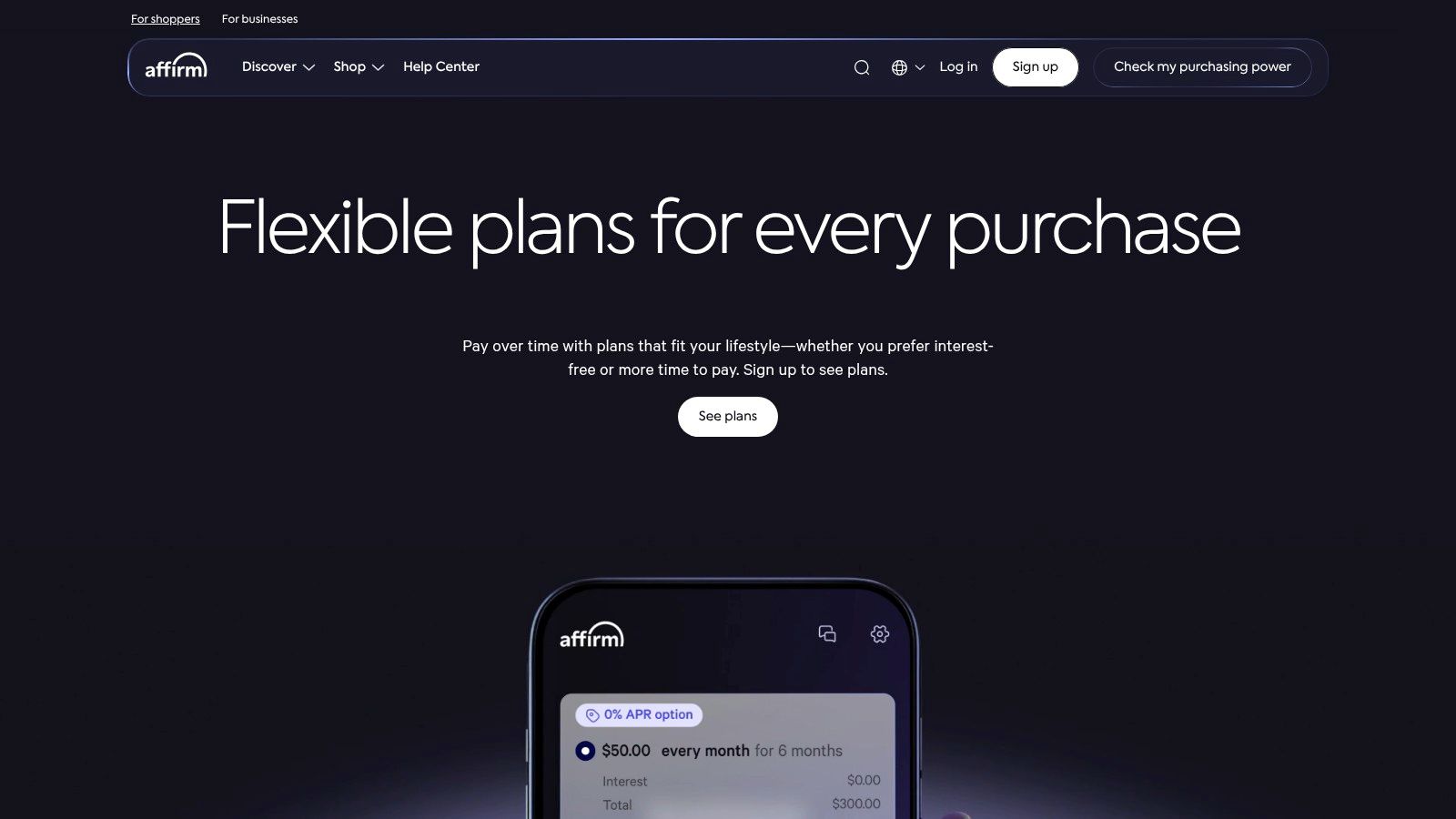
Say a shopper wants a higher-ticket product but doesn't want to pay the full amount immediately. Affirm may address that objection through eligible installment or financing options.
That's a different conversion problem from wallet friction. A wallet reduces effort; financing changes how an approved customer pays over time.
Evaluate the economics before the button
Treat buy now, pay later as a margin and customer-service decision as well as a checkout feature. Merchant eligibility, customer approval, purchase restrictions, and financing terms all affect whether the option belongs in a particular flow.
- Best fit: Eligible purchases where payment flexibility addresses a genuine buying objection.
- Main limitation: Displaying a financing option doesn't guarantee customer approval.
- Integration burden: Refunds, cancellations, partial returns, and support explanations need deliberate testing.
Don't promise specific repayment terms before the customer receives their actual offer. Keep a straightforward fallback for shoppers who decline financing or aren't approved.
I'd judge Affirm on completed-order contribution, not order value alone. Review payment costs, returned merchandise, support contacts, and the handling of amended orders. A larger initial purchase isn't automatically a better commercial outcome.
For subscriptions, validate the exact supported flow independently. Financing a purchase and authorizing future recurring collection are different requirements.
8. Klarna
Klarna can offer eligible shoppers pay-later or installment choices, depending on the market and transaction. Its strongest use case is a customer who wants payment flexibility and already understands the service.
Country-specific terms matter. Don't copy repayment language from another market or assume the same offer applies to every cart.
Stripe's payment-method overview distinguishes payment-method support across products and payment flows. For a DTC brand selling both subscriptions and individual products, that means checking recurring-payment behavior separately from initial purchase eligibility.
Compare Klarna with the right alternative
Klarna shouldn't be evaluated only against manual card entry. Compare it with the payment options an eligible customer would otherwise choose, then assess the commercial result.
- Conversion fit: Customers who prefer an eligible deferred-payment or installment offer.
- Eligibility constraint: Availability and approval depend on the customer, merchant, market, and purchase.
- Operational cost: Customer messaging, refunds, order changes, and payment-method charges require review.
Keep product-page promises conditional. “Available for eligible purchases” is more defensible than presenting financing as a guaranteed entitlement.
Margin test: Keep a pay-later method because it improves the economics of completed orders, not because customers select its logo.
Test subscription carts, mixed carts, discounted purchases, and partial refunds separately. A successful ordinary purchase doesn't validate every variation your merchandising team can create.
9. Cash App Pay
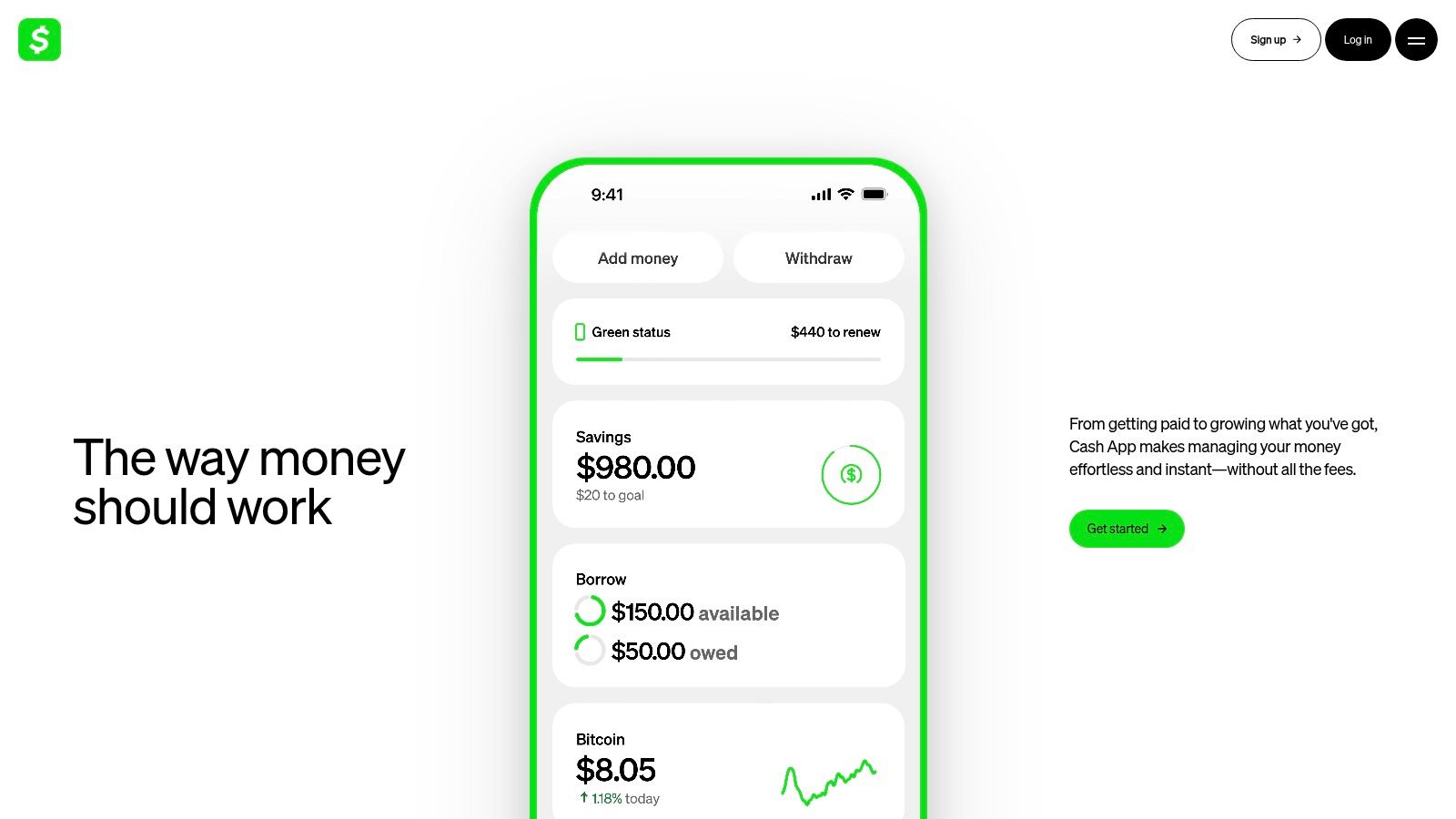
Cash App Pay is an audience-specific addition, not a global default. Cash App gives eligible customers a familiar way to pay using their balance or a linked debit card.
For a US-focused brand, it may be worth testing when customers already use the service. For an international store, don't confuse another US-oriented wallet with broader geographic coverage.
Familiarity determines usefulness
Stripe's wallet documentation distinguishes wallet flows involving stored credentials or balances and customer authentication. That matters because a wallet's checkout experience depends on the customer's existing setup, not just the merchant enabling it.
Before adding Cash App Pay, define the audience and the operational acceptance criteria:
- Customer fit: Establish whether eligible customers have a reason to prefer Cash App over existing options.
- Checkout fit: Test the authorization and return journey on supported mobile and desktop contexts.
- Lifecycle fit: Confirm payment status, refunds, and support visibility within your order process.
The conversion opportunity is avoiding unfamiliar card entry for an existing Cash App user. The limitation is reach: customers outside the supported geography or account conditions won't benefit.
Keep the experiment narrow. Compare eligible US traffic, inspect completed orders, and verify that the extra option doesn't create support confusion. Don't expect a targeted wallet to fix an international localization gap.
10. ACH Direct Debit
ACH Direct Debit through Stripe lets eligible US customers pay from a bank account rather than a card. It can suit recurring purchases or larger orders when the customer is comfortable authorizing bank debit.
The key trade-off is payment timing and fulfillment risk. A customer completing the checkout flow isn't the same as your business having the payment confirmation it needs to release goods.
Build for pending payments
Your order system needs a pending state that customers and support agents can understand. Don't label an order paid merely because the shopper reached a confirmation page.
- Conversion fit: Customers who prefer bank debit and accept the associated authorization process.
- Geographic limit: This is a US banking option, not a substitute for local bank methods elsewhere.
- Integration effort: Handle delayed outcomes, payment failures, insufficient funds, refunds, and recurring authorization requirements.
Use server-side payment events to update the order, and make event handling idempotent so repeated delivery doesn't create repeated fulfillment actions. Define when inventory is reserved, when the warehouse receives the order, and what happens if payment fails.
ACH is a poor fit for an instant-fulfillment promise your system can't safely support. It can be a sensible option when the commercial relationship and operational workflow accommodate bank-payment timing. Compare total operating costs rather than assuming that a bank method is automatically cheaper or simpler than cards.
Stripe Checkout payment methods at a glance
| Method | Type | Best for | Key limitation |
|---|---|---|---|
| Online payment methods by country, wallet, BNPL, bank and card | Payment-method availability guide | Comparing checkout options by country and purchase type | Availability varies; the guide does not guarantee an option at checkout |
| Credit and debit cards | Card payment | Familiar one-time and recurring payments | Customers may need to enter card details; fees and authorization rates vary |
| Apple Pay | Digital wallet | Fast checkout for customers using supported Apple devices | Requires a supported device, browser, and wallet setup |
| Google Pay | Digital wallet | Customers using Android devices or supported browsers | Availability depends on device, browser, and wallet setup |
| Link | Accelerated checkout wallet | Faster repeat purchases with saved details | Most useful to existing Link users |
| PayPal | Digital wallet | Shoppers who prefer PayPal or avoid entering card details | May require a separate integration and account |
| Affirm | Buy now, pay later financing | Eligible shoppers making higher-ticket purchases | Merchant and customer eligibility is not guaranteed |
| Klarna | Buy now, pay later | Shoppers seeking pay-later or installment options | Availability, approval, fees, and terms vary |
| Cash App Pay | Digital wallet | US customers who use Cash App | Geographic and account eligibility limit its reach |
| ACH Direct Debit | Bank debit | US customers paying from a bank account, including recurring payments | Settlement may be slower than card or wallet payments |
Choosing the Right Mix for Your DTC Checkout
The best Stripe Checkout payment methods are the ones your customers can use and your team can operate reliably. Start with cards as a baseline, then prioritize express wallets according to eligible device traffic and customer preference.
Geography comes before coverage claims. Build a market-level view of customer location, presentment currency, purchase type, and available payment methods. A long global list tells you little about the options shown to a particular shopper buying a particular cart.
Optimize completed orders, not payment-button clicks
Measure checkout completion and payment success alongside refunds, disputes, support contacts, and settlement behavior. For subscriptions, include renewal success and failed-payment recovery rather than judging a method solely on the first charge.
- For mobile-heavy audiences: Prioritize eligible express wallets and test address collection, shipping, and authorization on actual devices.
- For higher-ticket purchases: Evaluate BNPL against margin, approval behavior, returns, and customer expectations.
- For recurring orders: Validate initial authorization and future collection separately.
- For bank payments: Make pending states and fulfillment rules explicit before launch.
When a method is missing, investigate eligibility before rewriting the integration. Check account activation, country, currency, cart conditions, wallet setup, recurring support, and any explicit method configuration. Keep that diagnostic information available to the people handling checkout incidents.
Integration consistency matters as much as method breadth. Every supported route should connect to the same order identity and an understandable payment state. Refunds and payment failures shouldn't require support agents to reconstruct the purchase across unrelated records.
Our PlatformDTC checkout uses Stripe-hosted fields on the merchant's own domain, with cards, express wallets, and eligible Klarna or Afterpay options in one flow. Card details never reach our servers, and country and cart eligibility determine whether shoppers can split their payment.
The broader objective is to simplify your checkout process, not fill it with payment logos. Enable methods deliberately, test the awkward cases, and remove assumptions from customer-facing promises.
I'd rather ship a smaller, dependable payment mix than a broader one with unclear renewals, refunds, or fulfillment behavior. Add the next method when you can name the customer it serves, the friction it removes, and the operational work it introduces.
PlatformDTC brings checkout, subscriptions, payments, and order operations into a shared system, with cards and eligible wallet and pay-later options on your own domain. Visit PlatformDTC to evaluate a checkout setup that connects payment choice with the order lifecycle your team needs to manage.