PlatformDTC Automations

Connect with customers automatically

Create and customize marketing automations that are always on, so you can engage customers at every stage of their journey and set your business growth in motion.

Don’t have a PlatformDTC store? Get started.
Build hardworking automations

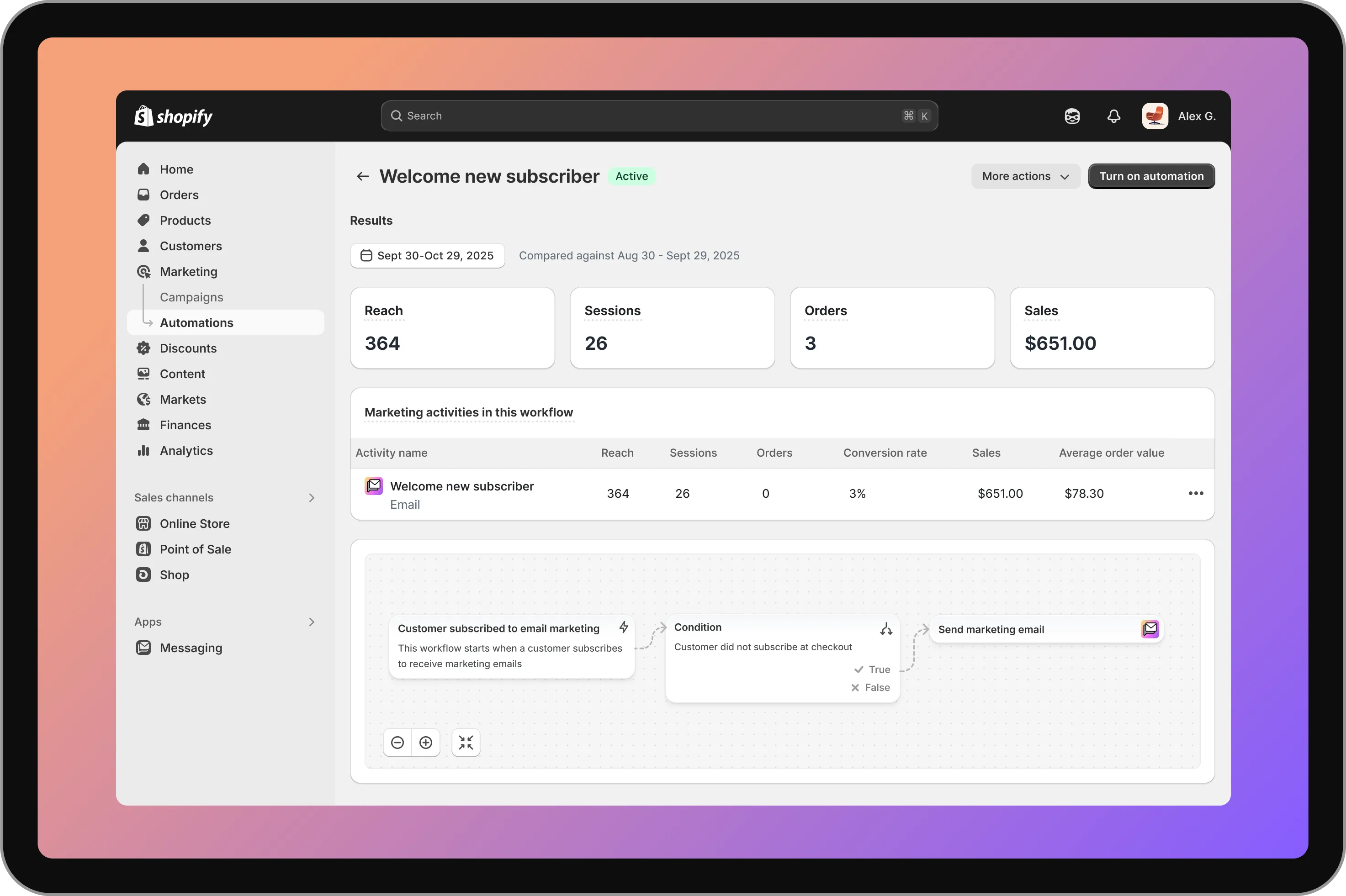
This image shows a marketing automation with PlatformDTC and how you can track results from your admin dashboard.

Custom automations

Build custom automations with a simple trigger-condition-action interface to match the exact needs of your business.

Templates for a customer’s journey

From welcome and winback automations to the first-purchase upsell, get ready-to-use templates built for commerce.

Fast and reliable

Powered by PlatformDTC’s infrastructure, your messages will reach your customers with no delays—unless you planned them.

Reach out at the right moment

Start and run automations to connect with customers at critical moments in their journey—from subscribing to your newsletter to placing their first order and every milestone in between.

Choose conditions

Decide how automations should run based on conditions that increase the chances of your message reaching the right customer at the right time. Send a message before an order is placed, a delivery is made, or on a special occasion.

Set timing and cool-down periods

Determine when messages should reach customers, even based on a previous action like a purchase. Include wait steps in your workflows to space out messages and create the right email cadence.

Build emails that run themselves

Get started in minutes

Choose from email automation templates, personalize the content, and start sending. Emails already include your logo and branding.

Track, test, and grow

Understand how email automations are performing with actionable reports like email engagement, sales, and more.

Do more in less time

Turn on your automations then let them run. No need to manually make email campaigns over and over again.
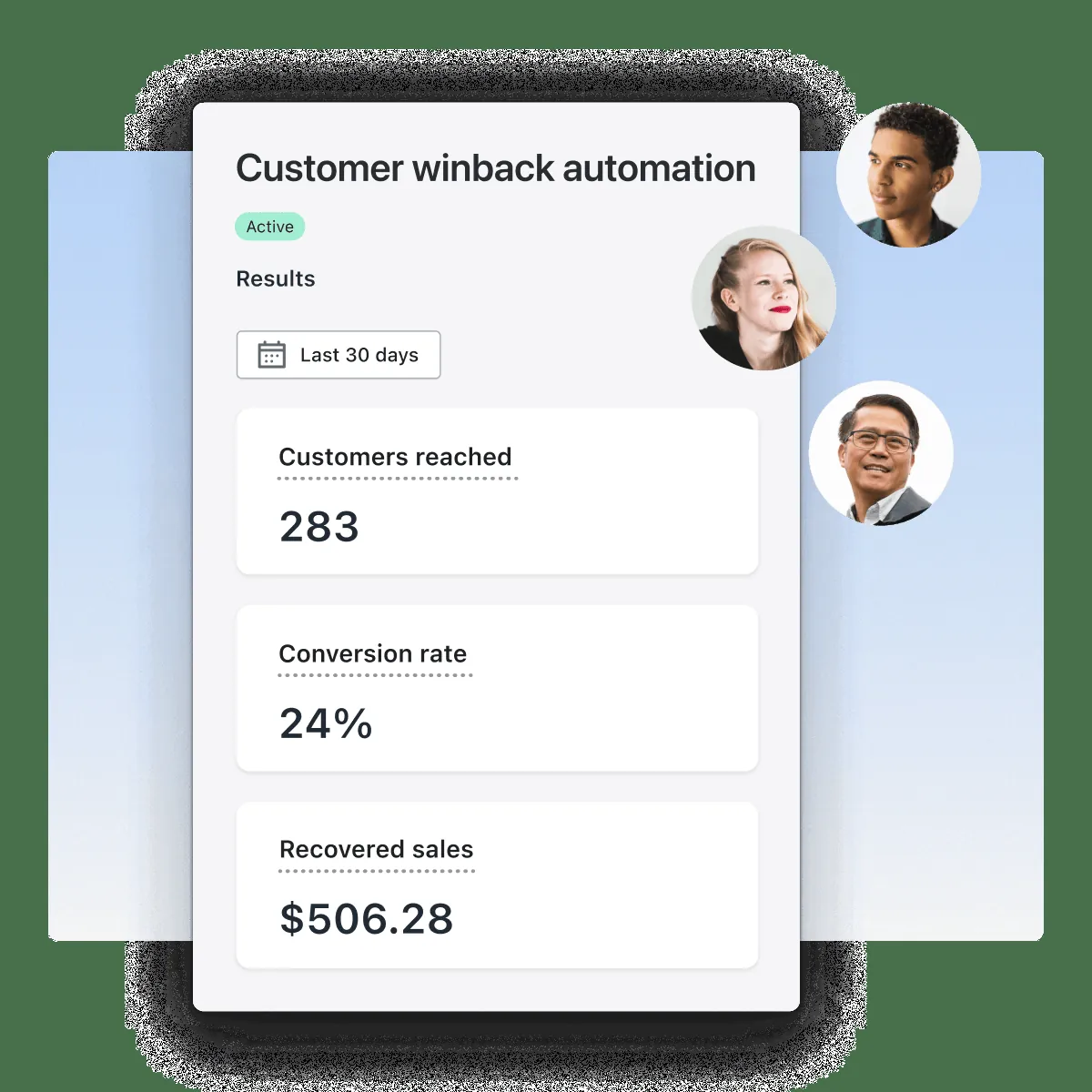
A performance dahboard for the 'customer winback template' that lists customers reached, conversion rate, and recovered sales. One large circle and two small circles with a purple gradient are in the background, while three small circles with a black man, white woman, and an asian man are in the foreground on the right.

Resources to start using automation

Help Center

Find instant answers and guided steps for building automations.

Contact support 

Online course

Learn how to use marketing automations to send key messages.

Take the course 

Blog

Learn about the latest automation strategies on the blog.

Start building automations to help your business grow

Don’t have a PlatformDTC store? Start for free. Your first month is $1.

Frequently asked questions

Which automation actually recovers the most revenue?
Pre-dunning, and almost nobody runs it. It contacts a customer before a renewal you can predict will fail — most often because the stored card expires before the next billing date — so the charge simply succeeds. There is no failed payment, no service interruption and no implied accusation. The reason it is rare is not disagreement; comparing card expiry against next bill date is a query nobody wrote.
Should a recovery email include a discount?
Generally not on the first attempts. The customer has not asked to leave — most failures are a dead credential rather than a value objection — so a discount converts a payments problem into a permanent margin reduction. Discounts belong in win-back, after recovery has genuinely failed.
Why do abandoned-checkout recovery emails underperform?
Usually the link rather than the copy. Recovery depends far more on the link resuming the exact cart state than on what the email says, and a message that drops the customer at a generic cart page recovers a fraction of what a resumable link does. The same applies to payment-update emails: a login wall between the customer and their intent to keep paying you loses a meaningful share of them.
When is the highest-leverage moment to intervene?
The first 90 days, by a wide margin. First-month subscription churn runs 12–30% across every vertical, far above steady state, because the first renewal is the first time a customer evaluates a decision they made once — often at a promotional first-order price. Onboarding that establishes when and how to use the product moves that number more than anything applied later.