Your store has outgrown the setup that got you here. The next decision is no longer about a prettier theme or one more app, it's about whether your business runs on subscriptions, wholesale, retail, content, or a mix of all four, and how much migration risk you can live with while you switch. The strongest bigcommerce alternatives are not the same kind of platform, so the right answer depends on your channels, your team's technical depth, and whether you need a cleaner operating model or just a different storefront.
That's why this list is grouped by business scenario and migration risk. Some platforms fit subscription-led DTC brands that want a tighter stack. Others are better for multi-channel retailers, composable enterprise teams, or content-heavy groups that want code ownership. A few are quick exits. A few are heavier lifts that only make sense when the business complexity is already there.
Table of Contents
- 1. PlatformDTC
- 2. Shopify / Shopify Plus
- 3. Adobe Commerce
- 4. Salesforce Commerce Cloud
- 5. WooCommerce
- 6. commercetools
- 7. VTEX
- 8. Elastic Path
- 9. SAP Commerce Cloud
- 10. Shopware
- BigCommerce Alternatives: Top 10 Feature & Pricing Comparison
- Shortlisting and Migrating Without Losing Revenue
1. PlatformDTC
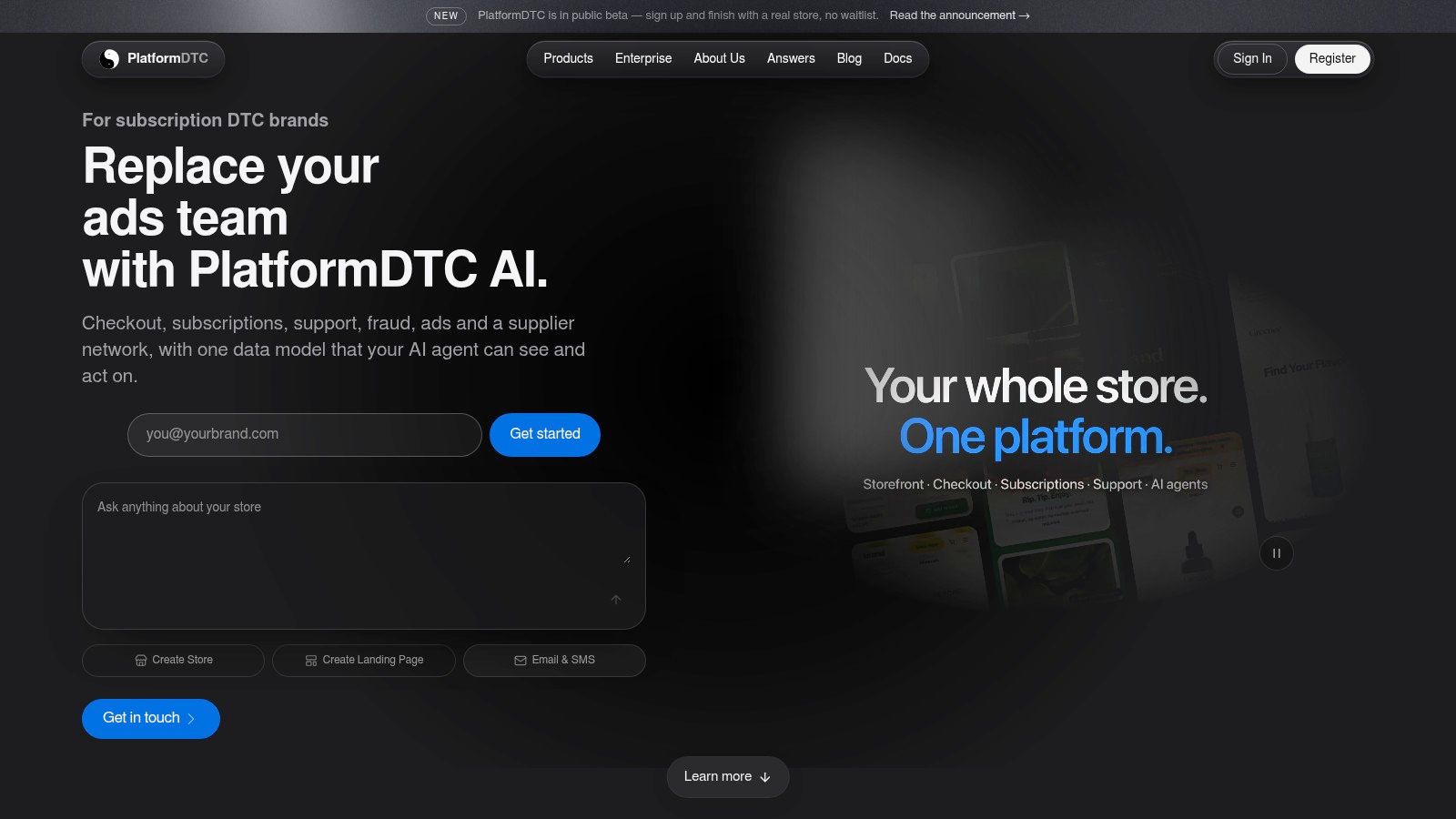
PlatformDTC is the cleanest fit when the core problem is app sprawl. It brings storefront, checkout, subscriptions, payments, inventory, fulfillment, messaging, and analytics into one order model, so the same record drives renewals, refunds, disputes, tracking, and reporting. That matters when a brand is losing time reconciling data across apps instead of improving the customer experience.
The platform is built for DTC teams that want governed automation, not just another layer of tools. DTC Agents can act through scoped dtc_* tools, and the guardrails are the point, with per-agent keys, approval gates on spend, idempotent writes, and a full audit trail. PlatformDTC also publishes status pages and research tools, including the Agent Readiness Checker and DTC AI Crawler Index, which signals that the product is designed for operators who care about control as much as speed.
Where PlatformDTC fits best
It makes the most sense for subscription-first brands, growing DTC operators, and retailers that need online, B2B, and in-person sales in one system. The built-in stack includes edge-served, domain-owned checkout, Apple Pay, Google Pay, PayPal, Klarna, Link, Amazon Pay, POS, B2B draft orders, invoicing, email and SMS, analytics, and ad integrations with Meta, TikTok, and Google. The platform also says its checkout is published with median TTFB around 46ms and LCP around 180ms in its own tests, which is useful as a benchmark, not a universal promise.
Practical rule: If your team spends more time syncing systems than selling, a unified order model usually beats another app-heavy build.
Use it if you want a governed stack that reduces synchronization points and keeps payments, subscriptions, and fulfillment inside one operating layer. It's less compelling if you want to assemble every component yourself, or if your business depends on a very specific third-party ecosystem that isn't in the current set of optional extensions. The site is PlatformDTC, and it's the right place to start if your migration brief is “less drift, fewer apps, tighter control.”
2. Shopify / Shopify Plus
Shopify is the default answer for teams that want to move fast without rebuilding their whole operating model. It works especially well for subscription-led DTC brands, omnichannel retailers, and teams that need a huge app ecosystem with strong POS support. If your current BigCommerce setup feels constrained but you still want a hosted platform with a deep partner network, this is usually the first shortlist entry.
Shopify Plus adds the enterprise layer, with higher API limits, multi-store management, deeper checkout customization, and controls for larger operations. That said, the platform still assumes you'll lean on apps and partners for some workflows, especially when B2B or custom operational logic gets complex.
Best fit and weak fit
Shopify is strongest when speed, ecosystem depth, and multi-channel selling matter more than strict architectural control. The main trade-off is that deep customization can push you into Liquid or custom development, and headless work is a different project rather than a minor theme tweak. The other catch is payment economics, because Shopify's checkout and fee structure can look very different depending on whether you can use Shopify Payments.
- Best fit for: fast-growing DTC, multi-channel retail, teams that want a mature app marketplace.
- Not the right fit for: very bespoke B2B workflows that need heavy customization from day one.
- Watch for: app sprawl, plan-specific checkout limits, and the cost of building around exceptions.
If you're comparing the move itself, keep one tab open on PlatformDTC's Shopify alternatives guide and another on your own order data. The platform can be the right answer, but it's not the simplest answer for every operating model. For merchant teams that need to connect Shopify orders to dispatch workflows, this delivery integration guide is a useful operational reference point.
3. Adobe Commerce
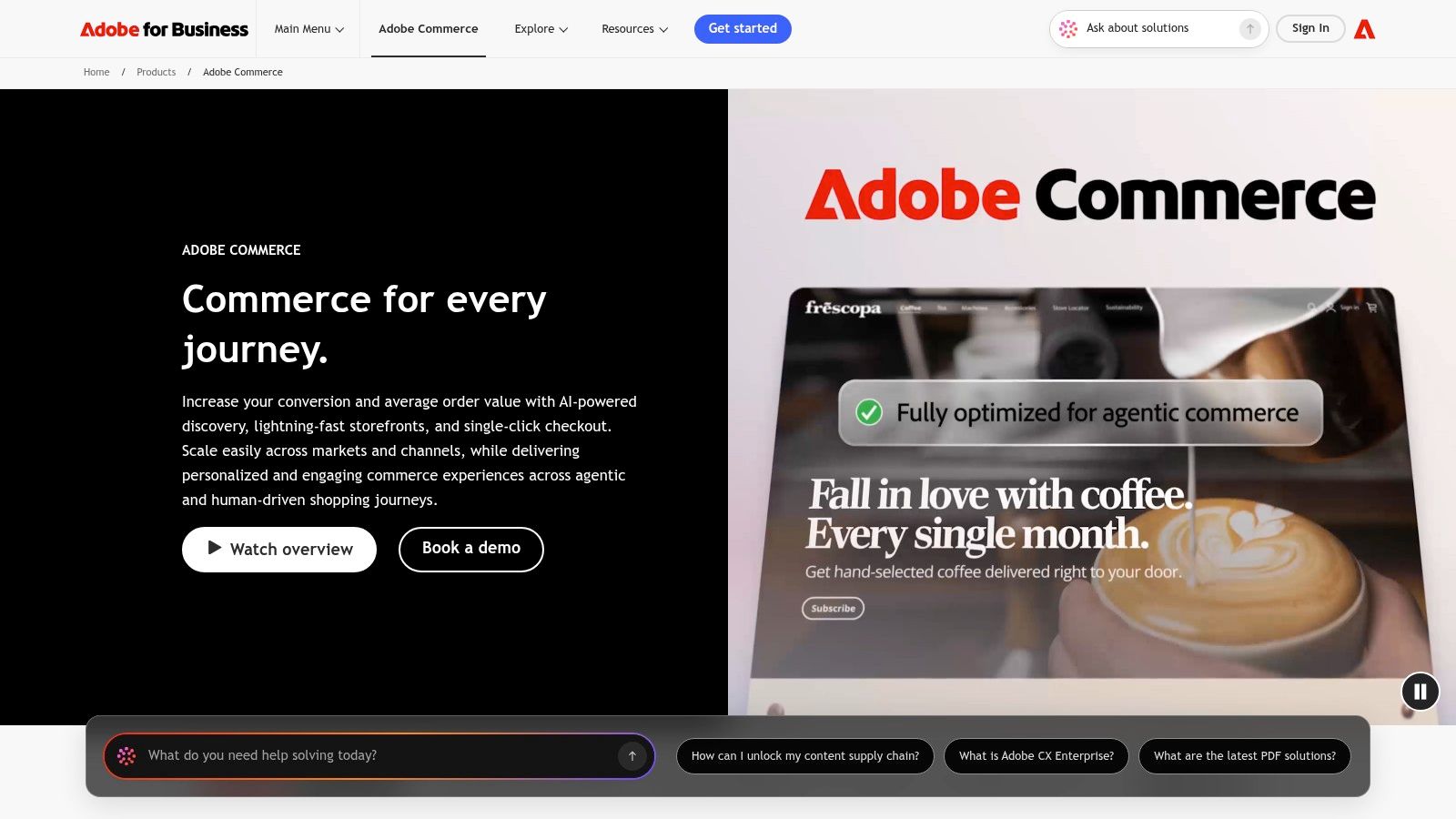
Adobe Commerce belongs in the conversation when you need a high ceiling for catalog complexity, pricing logic, and integration depth. It's the right kind of platform for enterprise teams that are already thinking in terms of order management, content, marketing, analytics, and system integration rather than just storefront design. Adobe's 2018 acquisition of Magento brought a large developer and partner ecosystem into the Adobe stack, and that history still explains why the platform is often chosen for governed enterprise programs rather than lightweight merchant builds.
It's also the kind of platform that rewards teams with strong implementation partners. The upside is control. The downside is operational weight. If you want a simple store that moves quickly with minimal oversight, this is usually more platform than you need.
When it wins and when it doesn't
Adobe Commerce makes sense for complex product modeling, advanced promotions, and B2B scenarios that need serious flexibility. It's less attractive when you want a low-maintenance SaaS experience, because the implementation and ongoing management are heavier than most hosted alternatives. For large teams, that trade can be worthwhile. For smaller DTC operators, it can be a drain.
A platform with a high ceiling is only an advantage if your team can actually operate it well.
If your current BigCommerce pain is around structural limits, governance, or enterprise process depth, Adobe is a serious option. If your main issue is cost and agility, it can become the opposite of what you were trying to escape. Before you commit, compare your migration path against PlatformDTC's ecommerce migration guidance, especially if you're moving subscriptions, customer data, and operational workflows at the same time.
4. Salesforce Commerce Cloud
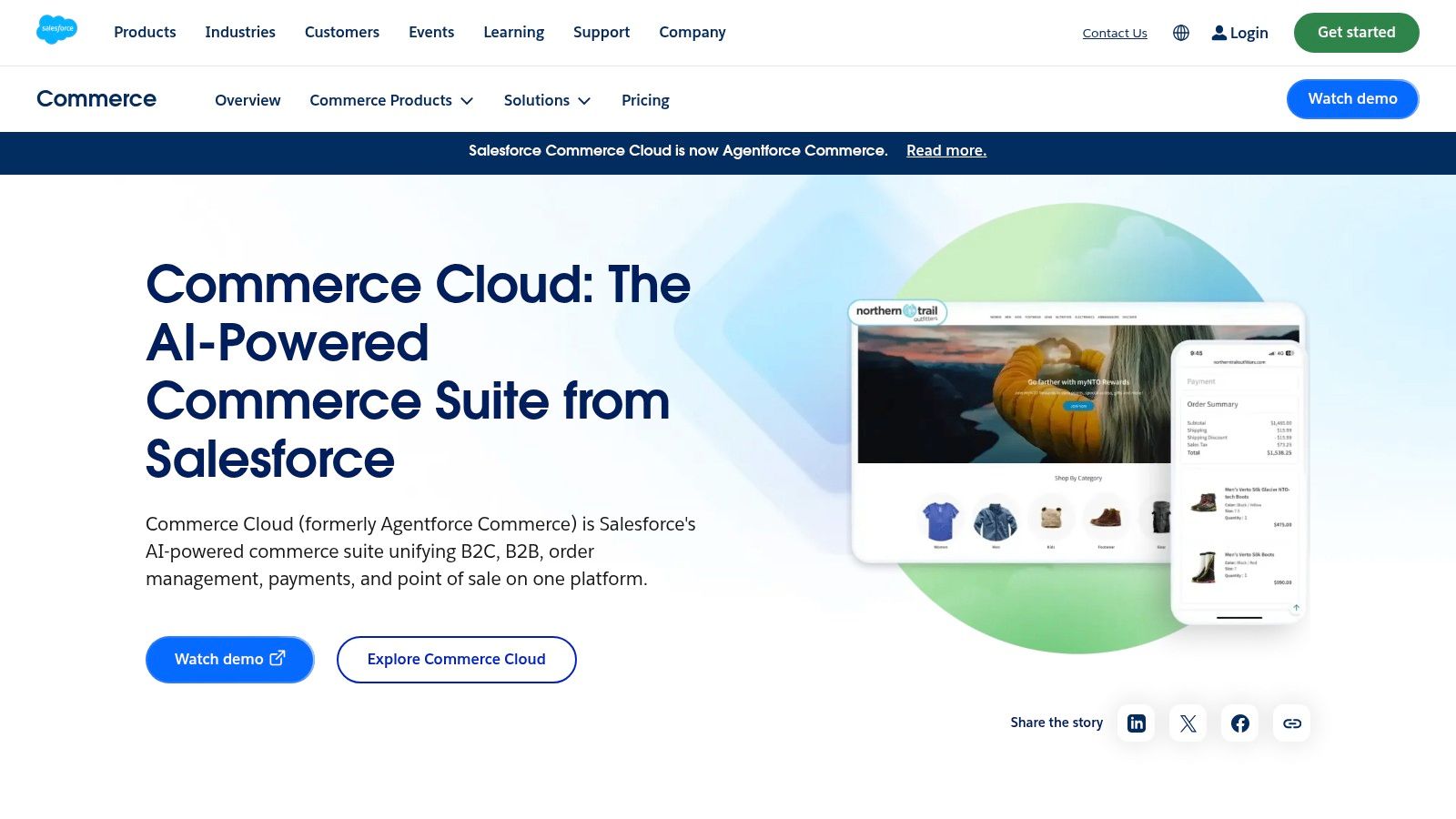
Salesforce Commerce Cloud fits organizations that already run sales, service, or marketing on Salesforce. The draw is not a single storefront feature. It is the way commerce sits inside the same customer data model as the rest of the stack. For enterprise teams, that can cut down internal handoffs and reduce the friction that slows launches.
It is a practical choice for B2C and B2B brands that need order management, omnichannel inventory, and enterprise support. It also fits teams that care about personalization and want commerce decisions tied to broader customer data. The trade-off is clear. Projects are usually partner-led, and the commercial model is harder to compare with simpler SaaS options.
Strong fit, narrow fit
Use it if your organization already speaks Salesforce fluently and wants commerce to follow that operating model. It is a weak fit when the team wants quick self-service implementation, transparent pricing, or fewer moving parts. The platform can do a lot, but that usually means more process around it.
- Best fit for: enterprise brands already invested in Salesforce.
- Not the right fit for: lean teams that want a fast migration with minimal partner dependence.
- Watch for: implementation complexity, commercial opacity, and scope creep.
It is not a casual replacement for BigCommerce. It suits companies that see commerce as one part of a larger customer system. For a comparison of platforms for wholesaler complexity, PlatformDTC's guide for enterprise wholesalers is a useful reference, even if PlatformDTC itself is not the final choice.
5. WooCommerce
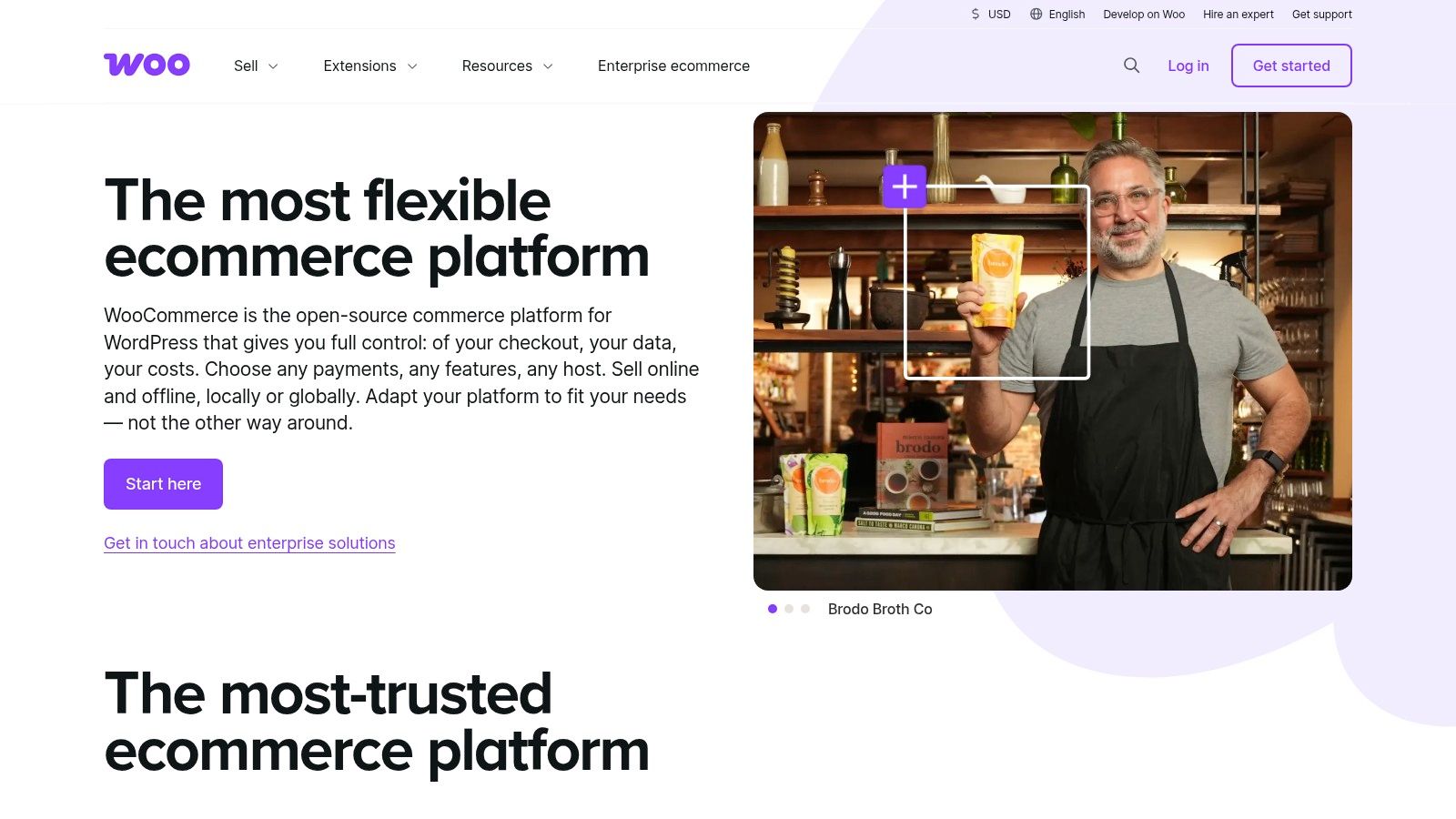
WooCommerce is the clearest self-hosted option for teams that want control over code, data, and infrastructure. It fits content-led brands, WordPress-native teams, and operators who want to assemble the stack themselves instead of accepting a fixed platform setup. If BigCommerce has started to feel too managed, WooCommerce gives you the opposite operating model.
That freedom comes with real responsibility. You own hosting, security, performance, backups, and plugin maintenance. For the right team, that is acceptable. For the wrong one, it becomes the migration risk.
Where it shines
WooCommerce works well when commerce and content need to live together in one WordPress environment. It also suits SEO-heavy brands that want to shape every part of the experience and keep full control of data. The strongest use case is a team that already knows how to run WordPress and is comfortable making technical decisions as part of day-to-day operations.
The trade-off is upkeep. Extension sprawl can become hard to manage, and performance depends on hosting, caching, and how carefully the stack is maintained. If your team does not already handle a WordPress commerce setup, the learning curve should be part of the migration decision, not an afterthought.
WooCommerce is freedom with operational overhead attached. That overhead is technical first, financial second.
For a migration lens that focuses on continuity rather than feature matching, the PlatformDTC ecommerce platform migration guide is a useful reference. WooCommerce makes sense when a brand wants ownership and can absorb the maintenance that follows. It is a poor fit for teams that want fast implementation, low-touch operations, or a platform that stays mostly out of the way.
6. commercetools
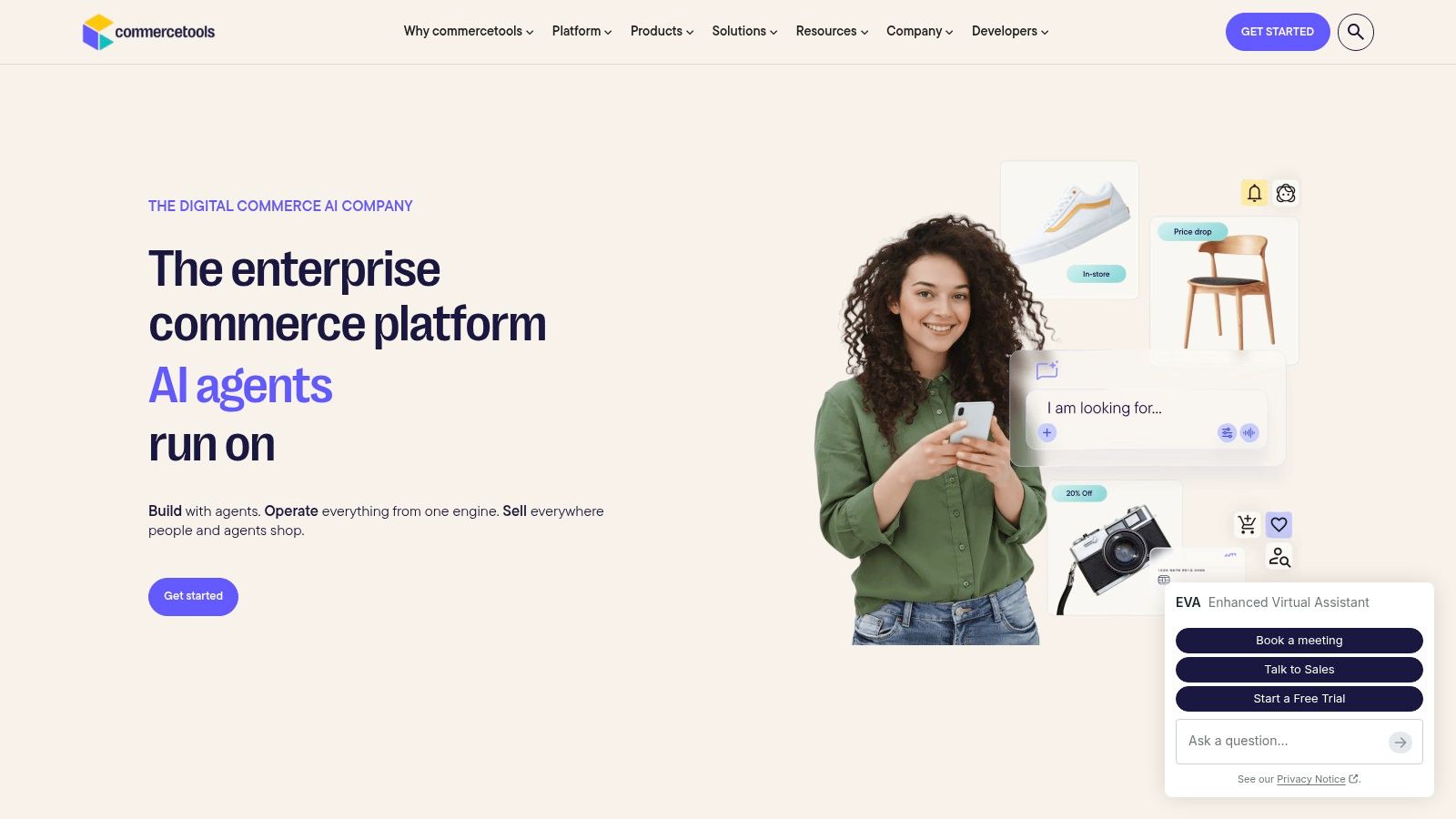
commercetools is for enterprise teams that already think in composable terms. It's API-first, headless-native, and built for organizations that want multiple frontends, multiple brands, or multiple commerce models on one backend. If your engineering team wants the freedom to assemble the customer experience without being boxed into a monolith, this is one of the serious contenders.
That flexibility is also the cost. Composable commerce isn't just a product decision, it's an operating model. You need platform engineering, integration discipline, and a partner ecosystem that can keep the moving pieces aligned. If you don't have that, the architecture becomes the project.
A platform for orchestration
commercetools works when the business needs granular control over pricing, carts, promotions, and catalog services. It also works when multiple brands or channels need shared commerce primitives without sharing a rigid storefront. The downside is total cost and implementation complexity, which are both heavily shaped by the rest of your stack.
If your current BigCommerce setup is already being stretched by multiple experiences, commerce orchestration, or custom frontend work, this is a credible alternative. If you're trying to reduce operational load, it may be the wrong direction. The platform is powerful, but it asks for discipline in return.
7. VTEX
VTEX is a strong fit when marketplace operations are part of the plan, not an experiment on the side. Its native marketplace tooling, OMS, and support for both B2B and B2C make it useful for brands that need to onboard sellers, sync inventory, and manage more than one sales motion at once. That's a very different requirement from a simple DTC storefront.
The platform tends to appeal to enterprises with complex operational choreography. It's less about the prettiest checkout and more about making multi-channel commerce manageable. That's valuable, but it also means implementation usually isn't lightweight.
Good when orchestration matters
VTEX stands out if you need a unified commerce story with marketplace and OMS capabilities built in. It's not the best fit for a brand that just wants to launch quickly and keep the stack simple. As with most enterprise platforms, systems integrator support is part of the equation, and pricing is quoted rather than obvious.
For wholesalers and sellers balancing retail, marketplace, and B2B motions, the PlatformDTC wholesalers article is worth reading even if you're only using it as a comparison point. VTEX is strong where operational complexity is the product problem. It's not the right answer if your main goal is low-friction DTC simplicity.
8. Elastic Path
Elastic Path sits in the middle of the composable spectrum. It's API-first and built for headless flexibility, but it gives you more curated building blocks than a pure from-scratch architecture. That makes it attractive to enterprise teams that want composable benefits without turning the whole migration into a platform engineering project.
This is a good option when you're moving away from a monolith and want better frontend freedom, but you don't want to invent every commerce primitive yourself. It's still not a plug-and-play move. You'll need integration work and a partner that knows how to assemble the stack cleanly.
Balanced, but not lightweight
Elastic Path is useful when the business needs headless experiences and the engineering team wants a cleaner starting point than building every service separately. The trade-off is the usual one in composable commerce, more flexibility means more planning. Licensing is bespoke, so total cost depends on the wider architecture rather than a tidy published rate card.
If your BigCommerce migration brief includes multi-front experiences, custom catalogs, or B2B complexity without a monolith, it deserves a look. If you want a platform that lowers operational burden right away, it may feel like a halfway house rather than a destination.
9. SAP Commerce Cloud
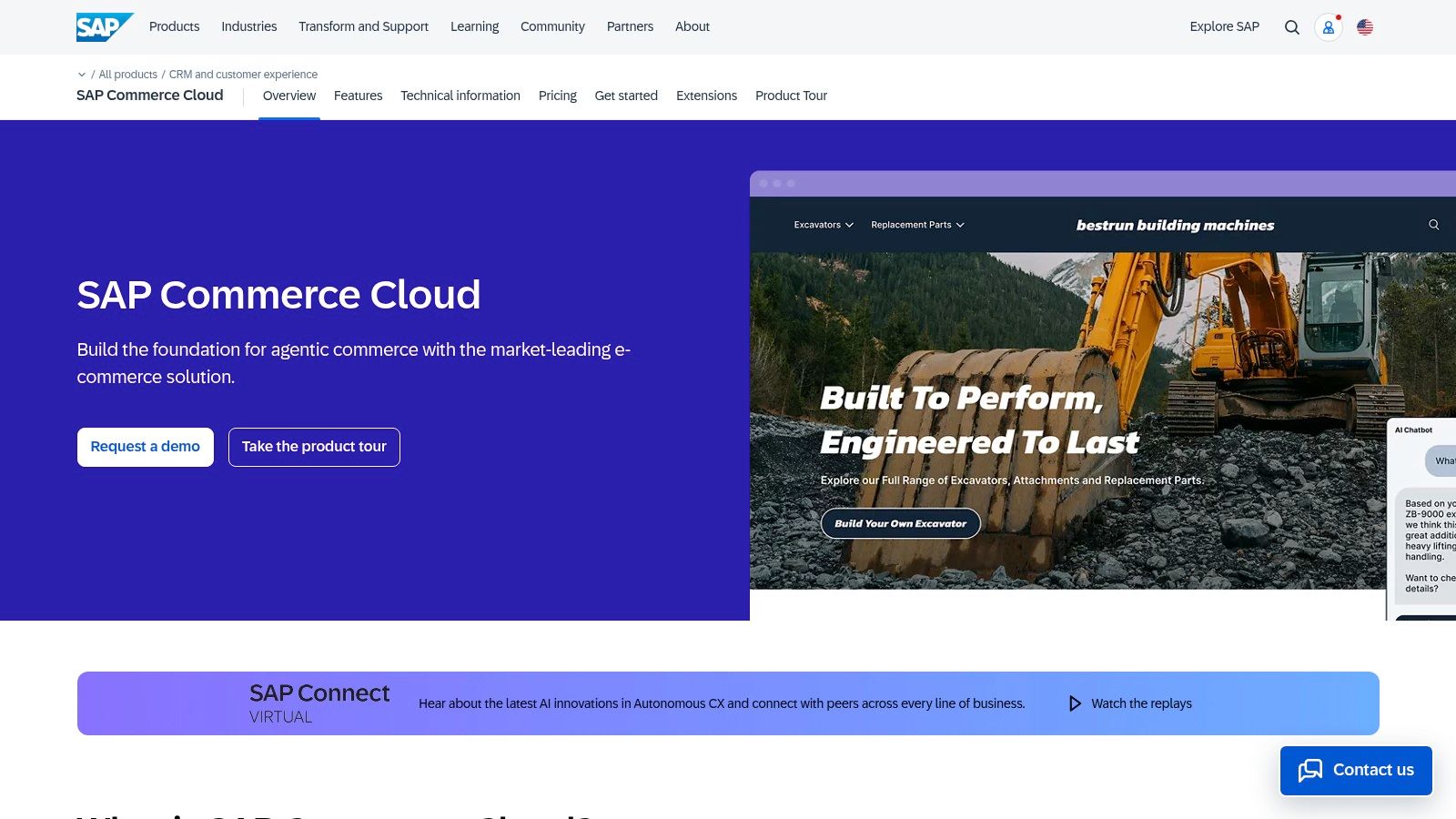
SAP Commerce Cloud is the enterprise answer for organizations where SAP already sits at the center of the business. It's built for complex catalogs, global rollouts, and deep B2B and B2C scenarios, especially when ERP and CRM integration matter as much as the storefront. That makes it attractive in regulated or operationally heavy industries.
The platform's strength is governance and enterprise process depth. The weakness is that the implementation burden is real. This is rarely a platform you adopt for speed.
Best when SAP is the system of record
If your business runs on SAP and needs commerce to follow that data model, this is a logical fit. It's less compelling for teams that want a quick, modern SaaS checkout and a small implementation footprint. Pricing is not public, the project is partner-led, and the procurement cycle tends to be longer than what leaner teams want.
SAP Commerce Cloud is a serious answer to serious operational complexity. It's not the right choice if your main frustration with BigCommerce is that the stack feels too heavy already.
10. Shopware
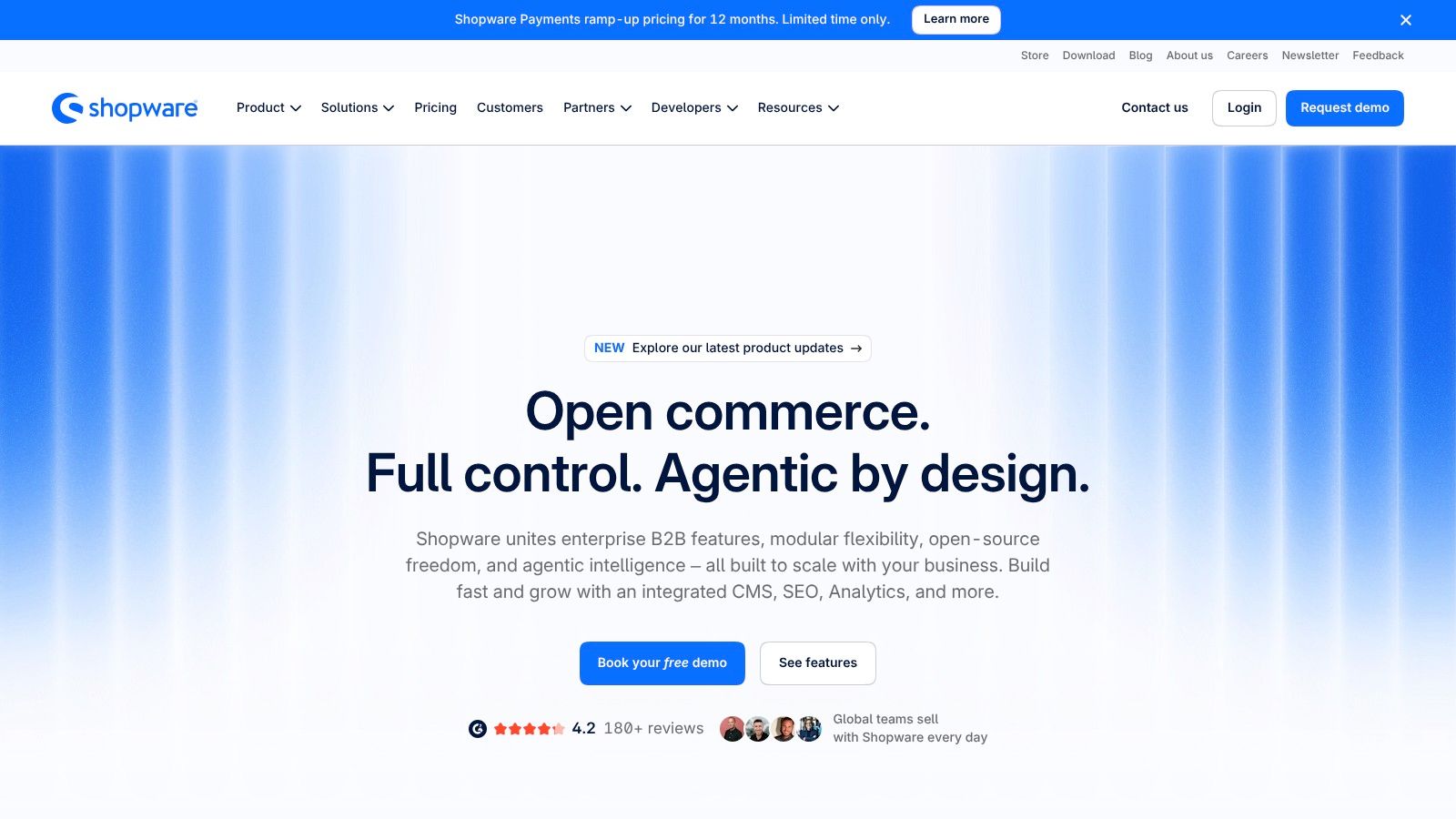
Shopware is one of the more flexible alternatives because it gives teams a choice between open source and commercial cloud plans. That matters for brands that want to keep future options open without betting the entire business on one deployment model. It's a strong content-and-commerce platform with a modern feel and growing B2B capabilities.
It's especially interesting for teams that want European-born software with a mix of code access and commercial support. The ecosystem is smaller than Shopify's or Adobe's, especially in North America, so partner availability should be part of your evaluation.
Flexible, with regional trade-offs
Shopware works well when content, commerce, and B2B workflows all need to live in the same platform. The open-source edition is attractive for teams that want control, while the commercial plans add support and more enterprise features. The trade-off is ecosystem depth, and some larger organizations may still need SI support to get the most out of it.
For merchants comparing BigCommerce alternatives with a real deployment choice, Shopware is a credible option. It's not the simplest choice, but it does give you room to grow without locking you into one operating model.
BigCommerce Alternatives: Top 10 Feature & Pricing Comparison
| Product | Key capabilities | UX & Performance (★) | Value & Pricing (💰) | Target Audience (👥) | Unique Selling Points (✨) |
|---|---|---|---|---|---|
| 🏆 PlatformDTC | Unified storefront, edge checkout, subscriptions, payments, POS, B2B, email/SMS, analytics, DTC Agents, migration tools | ★★★★☆; Edge TTFB ~46ms, LCP ~180ms; public status/metrics | Transparent platform fees + payment margins; free self-setup & sales migration options | 👥 Subscription-first & growing DTC ($1M–$50M ARR), enterprise ecommerce teams | Scoped agent keys, approval gates, idempotent writes; single order-of-record; direct Stripe/PayPal settlement |
| Shopify / Shopify Plus | All-in-one SaaS, POS, wallets, global Markets, huge app ecosystem | ★★★★☆; fast launch, proven reliability at scale | Tiered plans; Plus quote-based; apps can add recurring cost | 👥 Fast-growing DTC to enterprise retailers | Massive app/partner ecosystem; quick time-to-market; strong omnichannel POS |
| Adobe Commerce (Magento) | Extensible enterprise platform; promotions, APIs, B2B suite | ★★★☆☆; high ceiling when well-implemented | License + partner costs; higher implementation TCO | 👥 Brands needing deep customization & complex catalogs | Deep customization, advanced promotions, on-prem/cloud flexibility |
| Salesforce Commerce Cloud | Native OMS, CRM/marketing integration, AI merchandising | ★★★★☆; enterprise-grade reliability | Quote-based; pricing & procurement can be complex | 👥 Enterprises standardizing on Salesforce data fabric | Tight CRM/commerce integration; AI personalization; compliance programs |
| WooCommerce (on WordPress) | WordPress-native commerce, plugin ecosystem, content-first | ★★★☆☆; performance depends on hosting & setup | Low software cost to start; hosting/extensions affect TCO | 👥 Content-led DTC brands & teams wanting code/data ownership | Full control of code/data; best-in-class content/SEO workflows |
| commercetools | API-first, composable services for catalog, carts, promotions | ★★★★☆; excellent for engineering-led headless builds | Quote-based; TCO driven by overall composable architecture | 👥 Enterprises pursuing headless/multi-experience commerce | Maximum architectural flexibility; modern APIs & developer DX |
| VTEX | Native marketplace, OMS, headless storefront (FastStore) | ★★★☆☆; built for marketplace & omni scale | Quote-based; costs scale with marketplace complexity | 👥 Brands launching marketplaces or complex omni operations | Native marketplace onboarding & seller orchestration |
| Elastic Path | Composable modules, headless commerce building blocks | ★★★☆☆; balanced composable approach | Bespoke pricing; integration/partner work required | 👥 Enterprises migrating from monoliths to headless | Curated components to accelerate composable adoption |
| SAP Commerce Cloud | Modular enterprise commerce, ERP/CRM integration, OMS | ★★★★☆; mature for global, regulated use cases | Quote-based; longer procurement and implementation cycles | 👥 Global B2B/B2C with SAP ERP backbone | Deep ERP integration patterns; strong governance & security |
| Shopware (SaaS / Open Source) | Open-source + commercial plans; content + commerce, B2B features | ★★★☆☆; flexible deployment options | Community free; Rise/Evolve/Beyond priced plans with support | 👥 Brands wanting EU-focused flexibility & content-led CX | Choice of OSS or managed SaaS; strong content management and modern frontend |
Shortlisting and Migrating Without Losing Revenue
Start by narrowing this to two or three platforms that match your sales channels, subscription model, and team skills. A subscription-led DTC brand should focus on systems that keep renewals, payments, and customer data in one lifecycle. A multi-channel retailer should care more about POS, inventory, and order orchestration. A composable enterprise should test API depth, governance, and implementation partners before it looks at a theme or a homepage.
Don't compare list prices in isolation. Migration cost is where teams get surprised. Replatforming can involve data cleanup, catalog mapping, ERP or POS connections, custom checkout logic, QA, training, and parallel running, so the actual bill is usually a mix of implementation, recurring software, payment economics, internal engineering time, and operational risk. Treat that as the model, not the price page.
Ask every vendor for a written migration plan. It should cover catalog import, customer and order history, redirects, subscription continuity, test orders, and parallel-run steps. If a platform can't show how it will protect order integrity and checkout data before cutover, that platform is not ready for your store. You want a path that reduces revenue risk, not just a lower sticker price.
A good short list usually includes one safer hosted option, one operationally stronger enterprise option, and one platform that challenges your current architecture. Then you can compare them on actual workflows, not marketing claims. If you need help with the technical side of the move, Hire Developers and get the migration handled by people who know how to protect revenue during cutover.
If you want a platform that replaces app sprawl with a governed commerce system, PlatformDTC is built for that job. It brings storefront, checkout, subscriptions, payments, inventory, fulfillment, messaging, and analytics into one operating model, which is exactly why it belongs in any serious bigcommerce alternatives shortlist. Visit PlatformDTC to see how it handles the migration and operating complexity that usually get left out of platform comparisons.